
Dogs are the pleasing creatures and are an important part of our family by look out for us and create joyfulness when we feel down. Hence, we should return the favour and ensure they are under good care and health. Health of our pet is always dependent upon the feeding regimen in which they managed. Food provided should be balanced in such a way to satisfy the nutritive needs of our pets. Our pets are entirely depending on us for their dietary needs and we should always be vigilant while selecting the food items for them. Not all foods that we eat are fit for dogs and some foods are suitable for them, some may be used in small amounts, some are not fit for dogs and some foods are toxic to them. Hence, utmost care should be given while we choose an unknown or a new treat for them. Harmful foods that should be avoided for dogs include:
Chocolate
Chocolates are meant of celebration…..Yes for us and no for our pets. Dogs are easily affected by chocolate toxicosis because of their indiscriminate eating habits and easy access to sources of chocolate. The chief toxic principles in chocolate are the methylxanthines theobromine and caffeine. Both are more or less similar compounds and cause similar clinical signs such as an increase in heart rate, blood pressure, anxiety, tremors, and seizures. Further, severity of the toxicosis depends on the percentage of the above toxic principles present in the chocolate. Commonly the chocolate with darker colour and bitter taste are rich in the above two principles. Common clinical signs are hyperactivity, polyuria, ataxia, rigidity, tremors, and seizures. Immediate attention of the vet is must in severe cases.
Avocado
The avocado, alligator pear or avocado pear is an evergreen tree in the laurel family which is native of America. This fruit is a main ingredient in the preparation of Guacamole, a Spanish food item. The toxic principle in avocado is Persin. Studies have been conducted and show that avocado is not highly toxic to dogs when they eat the pulp in small quantity but too much might cause vomiting or diarrhoea in dogs. But ingestion of’ pit may make them ill. Avocado pits can become stuck in the intestines or stomach and result in obstruction.

Alcohol
The effect of alcohol in dogs are similar to the effect in humans. Further the effect of alcohol depends upon the percentage of alcohol in the drinks and also the body size of the pet. The beverages like beer contain less than 5% of ethanol and drinks like brandy and whiskey contain more than 40% of ethanol. Hence, intake of whiskey or brandy is more severe than beer. Alcohol can cause vomiting, diarrhoea, incoordination, breathing difficulties, coma, even death. Alcohol and products containing alcohol should be kept in a safe place in out of reach of your pets.
Allium species poisoning
Allium species consist of onion, leek, chive and garlic and they are the unavoidable ingredients for Indian style culinary. Further, they are also used as ingredients in many ethnomedical treatments.
Allium species contain a wide variety of organosulfoxides, converted into a complex mixture of sulfur containing organic compounds while crushing or slicing. In many cases, consumption of an Allium spp causes inflammation of the gastrointestinal tract, irritation of oral cavity, drooling of saliva, nausea, vomiting and diarrhoea.
Severe cases, red blood cells are destroyed due to the damage of red blood cell membranes which will result in anaemia. Anaemic conditions will lead to oxygen demand for vital organs, increased heart rate, respiratory rate, weakness, discoloured urine, kidney damage, collapse, and even death.
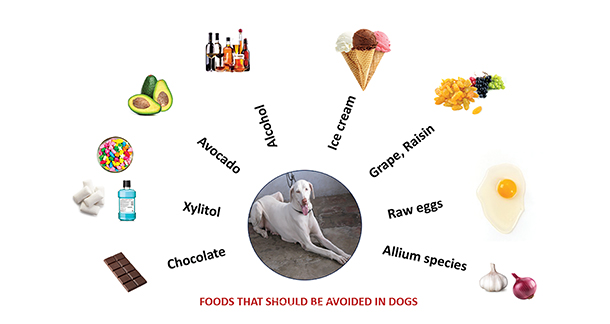
Xylitol poisoning
Xylitol is a naturally occurring ingredient that is generally used as a sugar substitute and is found naturally in berries, corn, lettuce, oats, plums, mushrooms, trees, and some fruits. Xylitol is used to sweeten sugar-free products, such as gums, candies, mints, peanut butter, and baked items.
Pets are affected by xylitol poisoning when they are ingesting xylitol or xylitol-containing products. In dogs xylitol triggers a rapid, dose-dependent insulin release that can results in profound hypoglycemia. Clinical signs will be vomiting, weakness, ataxia, lethargy, seizures, and coma.
Grape, Raisin, and Tamarind
These fruits contain tartaric acid, an organic acid and dogs are poorly excrete organic acids, allowing tartaric acid to accumulate in the proximal renal tubular cells. Clinical signs of grape, raisin, or tamarind toxicosis are vomiting or diarrhoea, lethargy, anorexia, abdominal pain, weakness, dehydration, polydipsia, and shivering.
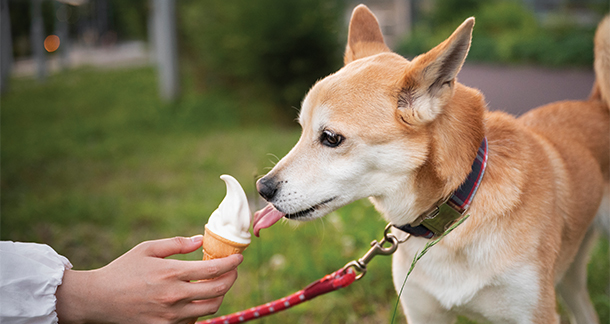
Ice cream
Ice cream is not an ideal treat for dogs. Ice cream may contain chocolate, sweetening agents like Xylitol and added raisin (Black currant ice cream) which all causes illness in dogs. Some dogs experience lactose intolerance while fed with ice cream.

Raw eggs
The enzyme avidin present in the raw eggs decreases the absorption of biotin (B vitamin), which can lead to skin and coat problems in dogs.
The above listed ingredients should be avoided by careful selection of food ingredients for the dog. Apart from that, possibilities are there for the accidental ingestion of dangerous chemicals commonly found in domestic cleaning agents, pest control products, agricultural pesticides, flea and tick products etc. Hence, storing such items in places that are away from the reach of our pets is important to avoid the untoward episodes.
About the Author
Department of Livestock Production Management
Veterinary College and Research Institute Tirunelveli- 627 358