
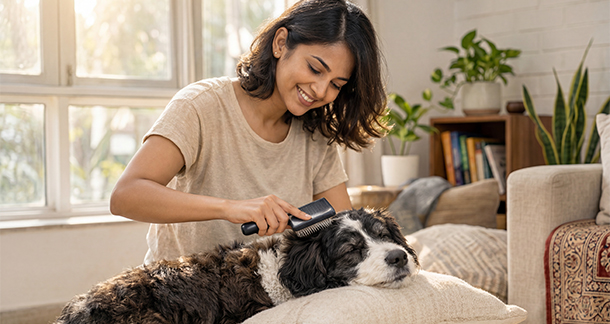
Between the bubbles and the bows, professional grooming is often seen as a luxury. However, for our four legged companions, it is an important part of their health, comfort, and overall wellbeing. More pet parents today understand that grooming is not just about appearance. It also supports hygiene, skin care, and coat maintenance.
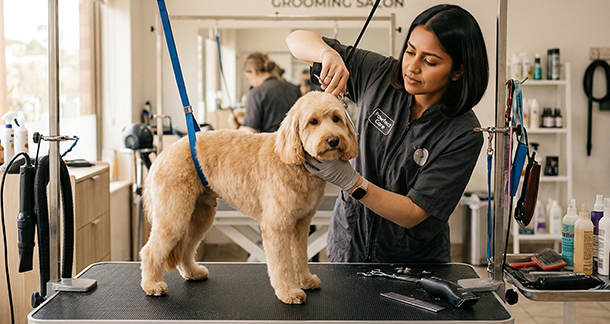
A professional grooming salon plays an important role in a pet’s routine. Regular salon visits help with bathing, drying, brushing, de-shedding, nail trimming, hygiene care, and coat maintenance, which often require trained handling and the right tools. For many pets, especially those with long, curly, dense, or high-maintenance coats, professional grooming is an important part of proper care.
But grooming should not be limited to the salon.
A pet may go to the salon once every few weeks, but the real upkeep happens at home every day. The coat can start tangling before the next appointment. Paws collect dust and dirt after every walk. Nails keep growing. Ears need attention. Hygiene areas need to be kept clean. The best grooming results come when the salon and the pet parent work together.
A good salon can do a great deal, but it cannot replace the small, regular habits that keep a pet comfortable between appointments.
The Professional Edge
A good grooming salon offers far more than a bath and haircut. A trained groomer assesses skin and coat condition, handles the pet safely, uses suitable products, trims nails, manages hygiene areas, and works according to the pet’s breed, coat type, age, and comfort level.
Groomers also often notice early signs of trouble. Ticks, matting, ear irritation, skin redness, bad odour, unusual sensitivity, or changes in the coat are sometimes first picked up during grooming. This makes regular salon visits useful not only for maintenance but also for early observation.
Salon visits also help pets become more familiar with the grooming process itself. Being brushed, bathed, dried, or having paws and ears handled becomes easier when it is done regularly and correctly. Pets that are used to grooming usually cope better and feel less stressed during appointments.
Still, even the best salon cannot make up for poor care at home. That is where pet parents play an equally important role.
Bridging the Gap: Your At-Home Routine
Brushing
If there is one basic habit that makes the biggest difference, it is brushing.
Brushing helps remove loose hair, dirt, mild tangles, and trapped debris before they turn into a larger problem. It also allows pet parents to check the skin more closely and notice anything unusual.
Many owners feel the coat is fine because the top layer looks neat. But underneath, especially in long- or curly-coated pets, knots can form close to the skin. Once matting begins, it becomes uncomfortable for the pet and much harder to manage.
Different coats need different brushing routines. A Labrador will not need the same care as a Shih Tzu, Golden Retriever, Poodle mix, or Persian cat. The important thing is to understand your pet’s coat and keep up with brushing before the coat becomes difficult to handle.
Paw Care
In Indian weather and road conditions, paw care is often overlooked.
Pets walk on dust, mud, damp patches, society compounds, rough roads, and outdoor dirt every day. Wiping the paws after walks is a simple habit, but a very useful one. It helps keep the pet clean and also gives pet parents a chance to check for small cuts, redness, dirt stuck between the pads, or signs of irritation.
Pet parents should also check the hair around the paw pads. When it grows too much, it can trap dirt and affect the pet’s grip on smooth floors.
Ears And Eyes
Pet parents should regularly check their pet’s ears and eyes, even if they are not doing a full cleaning at home.
If there is redness, wax build-up, discharge, bad smell, frequent scratching, or head shaking, the ears may need attention. The same goes for the eyes. In pets with facial hair or tear staining, the area around the eyes should be kept gently clean.
Very often, small changes are first noticed at home. Early observation can help prevent bigger issues later.
Hygiene Between Baths
Basic hygiene should continue even when it is not bath day.
The sanitary area should be kept clean. Pets with long facial hair may need regular wiping around the mouth. Pets with skin folds need those areas checked and kept dry. During the monsoon or humid weather, any dampness in the coat should be taken seriously.
Moisture trapped in the coat or skin folds can quickly lead to odour, itching, skin irritation, hot spots, and infection. Keeping a pet dry and clean in daily life is often just as important as the bath itself.
Nail Observation
Even if nail trimming is done professionally, pet parents should still monitor nail length. If the nails are making loud clicking sounds on the floor, affecting movement, or causing the pet to slip, they have already grown too long.
Overgrown nails can affect comfort and posture, so they should not be ignored.
Handling And Familiarity
One of the most useful things pet parents can do at home is make their pets comfortable with basic handling. Touch the paws gently. Check the ears. Wipe the face. Run your fingers through the coat. Do this calmly and positively.
This is especially important for puppies. Pets that get used to touch from an early age are usually easier to groom and less fearful during salon visits.
Home Care And Professional Grooming Go Together
Basic home care is important, but it cannot replace a professional groomer. At the same time, one salon visit every few weeks is not enough if everything is left untouched in between.
Both have an important role.
At the salon, the groomer brings trained hands, experience, and the right tools. At home, the pet parent notices the everyday things first—whether the coat is starting to tangle, the paws are dirty, the ears seem irritated, or the pet is not feeling as comfortable as usual.
When both come together, the pet stays cleaner, more comfortable, healthier, and easier to groom.
That is what grooming should be about.
Not just how a pet looks after a salon visit, but how it feels every day in between.
Good grooming starts at home. It is shaped by the small, regular routines that keep a pet clean, comfortable, and well cared for.
–
Jessica John
Grooming Mentor
Petswag
Certified From South Korea, Malaysia & India