
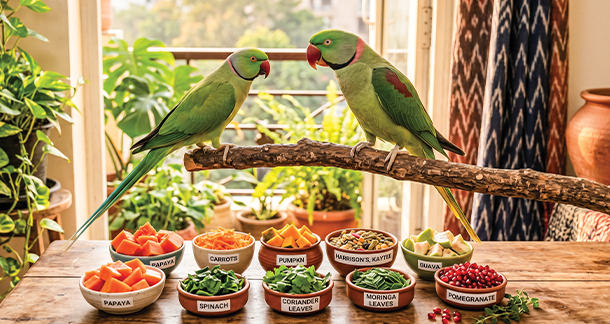
Birds are among the most beloved pets in Indian households, yet they are also among the most nutritionally neglected. From the cheerful Indian Ringneck perched in a Mumbai balcony cage to the Alexandrine parakeet in a Delhi home, millions of pet birds across India are being fed diets that fall dangerously short of what they actually need. Experts estimate that the vast majority of health problems seen in pet birds trace back directly to poor nutrition and the good news is that most of these problems are entirely preventable.
The Seed and Grain Trap
In most Indian homes, birds are fed a daily mix of bajra, jowar, wheat, and occasionally rice or leftover roti. While these grains are not harmful in themselves, they are deeply insufficient as a complete diet. Grain-heavy diets are typically low in Vitamin A, calcium, essential amino acids, and key trace minerals. Over time, this leads to weakened immunity, poor feather quality, respiratory infections, and a significantly shortened lifespan.
A bird that eats only grains may appear healthy for months or even years, but the deficiencies accumulate silently. By the time symptoms appear, the damage is often already serious.
Vitamin A: India’s Biggest Avian Nutrition Gap
Vitamin A deficiency is the single most common nutritional problem in pet birds, and it is rampant in India given the grain-dominant feeding culture. The early signs are easy to miss, slight swelling around the eyes, nasal discharge, or a bird that seems dull and less vocal than usual. Left unaddressed, the deficiency progresses to respiratory infections, mouth abscesses, and severe breathing difficulty.
The fix, fortunately, is simple and affordable. Indian kitchens are full of Vitamin A-rich foods that birds can safely eat: ripe papaya, carrots, sweet potato, pumpkin, spinach, coriander leaves, and moringa (drumstick leaves), which is one of the most nutrient-dense greens available in India and an excellent addition to any bird’s diet. Offering a small portion of these vegetables and fruits daily can dramatically improve a bird’s long-term health.
What a Balanced Bird Diet Actually Looks Like
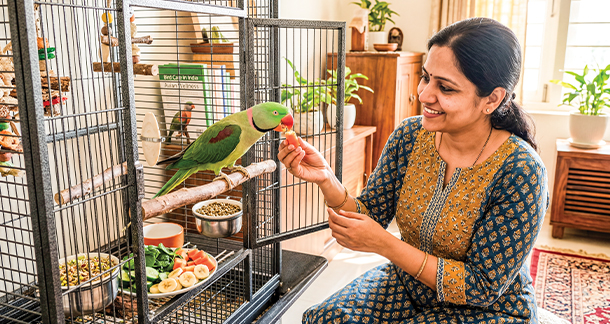
A well-nourished pet bird needs more than seeds and grains. The ideal diet has three components working together:
The base should be a quality formulated pellet, which provides balanced nutrition in a single food item. Pellet availability in India has improved significantly with the growth of the pet care market, and options are now accessible through online retailers and specialty pet stores in most major cities. Pellets should ideally make up at least half the diet.
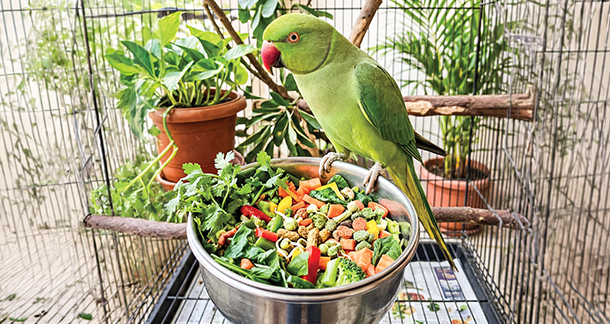
Fresh vegetables and greens should be offered daily. Affordable and locally available options include carrots, spinach, fenugreek leaves, coriander, cucumber, and seasonal gourds. These provide fibre, vitamins, and minerals that grains simply cannot supply.
Fruits can be offered a few times a week. Guava, papaya, banana, pomegranate, and ripe mango are all safe and nutritious choices that are widely available across India year-round.
The Table Scrap Problem
A common practice in Indian households is sharing table food with pet birds — small pieces of roti, cooked dal, rice, or even spiced vegetables. While the intention is affectionate, this habit carries real risks. Spiced, salted, or oily food is harmful to birds. Cooked dal in small amounts is not dangerous, but it should never replace proper nutrition. Birds fed primarily on human table food tend to develop obesity, liver problems, and mineral imbalances over time.
Calcium and the Egg-Laying Bird
Calcium deficiency is particularly dangerous for female birds. A hen that does not receive adequate calcium is at serious risk of egg binding—a condition where an egg becomes stuck inside the bird and can be fatal if not addressed quickly. Cuttlebone, which is inexpensive and widely available at Indian pet shops, should be kept in every bird cage at all times. It allows birds to self-regulate their calcium intake naturally.
Species Matter
Different birds have different needs. Indian Ringnecks and Alexandrine parakeets do well on a mixed diet of pellets, fresh produce, and limited grains. Mynahs and hill mynahs are softbill birds that require fruit, protein, and low-iron diets, they should never be fed iron-rich foods or standard parrot pellets, as iron storage disease is a serious risk for this species. Munias and finches are seed-eaters by nature but benefit greatly from the addition of sprouted seeds, which are significantly more nutritious than dry seeds and easy to prepare at home.
A Note on Avian Vets in India
Access to avian veterinarians in India remains limited, concentrated largely in metros like Mumbai, Delhi, Bangalore, Chennai, and Hyderabad. If you notice your bird losing weight, sitting fluffed at the bottom of the cage, breathing with effort, or showing changes in droppings, do not delay in seeking professional help. Several veterinary colleges across India now have exotic animal or avian departments, and online avian vet consultations have become increasingly available post-pandemic.
The Bottom Line
Feeding a bird well in India does not require expensive imports or complicated routines. It requires understanding that grains alone are not enough, adding locally available vegetables and fruits to the daily diet, ensuring calcium is always accessible, and paying attention to the specific needs of your bird’s species. Small, consistent improvements in what goes into your bird’s bowl can add years to its life and significantly improve the quality of those years.