
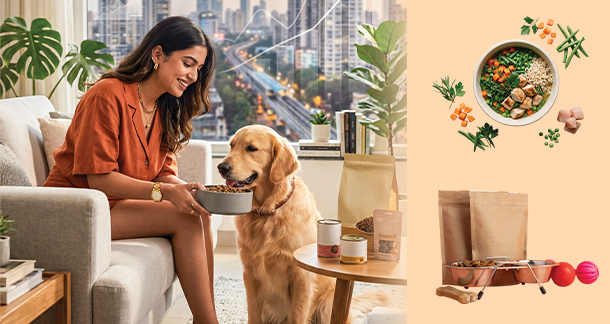
The pet care market in India is projected to surge from USD 4.83 billion in 2024-25 to a massive USD 9.48 billion by 2030-31. This financial trajectory is grounded in a rapidly expanding consumer base; India’s pet population has risen from 32 million to a projected 51 million by 2028. Within this USD 20,000 crore ecosystem, the pet food segment stands as the definitive anchor, dictating the pace of innovation and retail expansion across the subcontinent.
The Pet Food Dominance: Key Statistics
Pet food remains the primary growth engine of the industry, capturing the largest share of the household pet budget and serving as the entry point for organized retail.
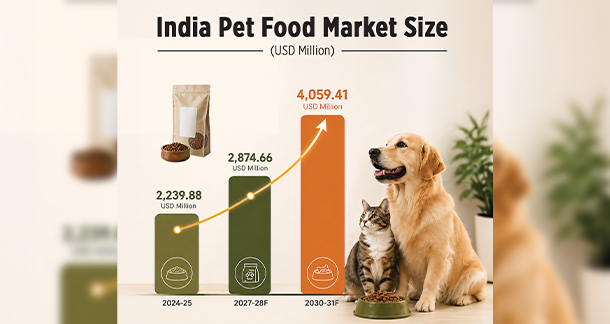
Market Insight: The pet food segment maintains undisputed leadership in the Indian pet care ecosystem, commanding a ~45.89% market share in the 2024-25 fiscal year.
|
Year |
India Pet Food Market Size (USD Million) |
|
2024-25 |
2,239.88 |
|
2027-28F |
2,874.66 |
|
2030-31F |
4,059.41 |
This expansion represents a robust CAGR of 12.52%, solidifying pet food’s role as the central pillar of the industry’s long-term scalability.
Category Analysis: Identifying Growth Pockets
As pet parents become increasingly discerning, the market is fragmenting into specialized sub-categories. While dry food maintains volume dominance, the rise of “indulgence” and “functional nutrition” is reshaping the value distribution.
|
Product Category |
2024-25 Value (USD Million) |
2030-31 Projected Value (USD Million) |
CAGR (2025-2031F) |
|
Dry Food |
1,687.98 |
2,946.88 |
10.28% |
|
Wet Food |
303.43 |
583.40 |
12.07% |
|
Snacks and Treats |
188.49 |
402.25 |
14.03% |
|
Others (Supplements/Functional) |
59.99 |
126.88 |
13.60% |
Analytical Perspective: The 14.03% CAGR in Snacks and Treats is the highest in the sector, directly reflecting the “humanization” trend where rewards are used to facilitate emotional bonding. Wet food (12.07% CAGR) and the “Others” category (13.60% CAGR) are also outperforming the baseline dry food growth, signaling a move toward variety and preventive healthcare.
Strategic Market Drivers: Forces Catalyzing Expansion
The unprecedented boom in the Indian pet sector is fueled by a convergence of lifestyle shifts and technological accessibility:
- Humanization and Emotional Spending: Pets have transitioned from being “outside the house” to the living room and eventually the bedroom. Owners now mirror their own dietary preferences in their pets, seeking “human-grade” and natural ingredients.
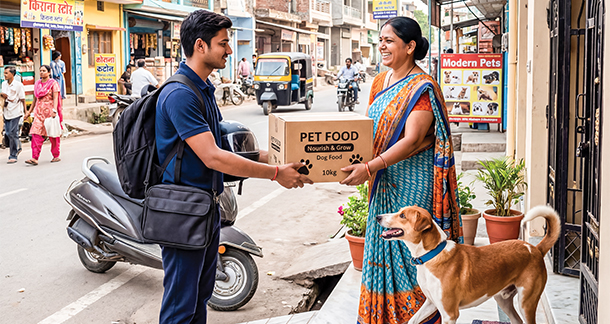
- Quick Commerce & E-commerce Penetration: The integration of pet care SKUs into platforms like Blinkit, Swiggy Instamart, and Zepto has solved the “last-mile” challenge, particularly in Tier 2 and Tier 3 cities, where specialized pet stores were previously scarce.
- The Gen Z Factor: Younger demographics are driving the 14.03% growth in treats and specialized products. Gen Z prioritizes pet well-being as a lifestyle choice, often opting for high-quality, organic, and ethically sourced options.
- Premiumization and Aspirational Living: The emergence of nuclear families and double-income households has increased the “willingness to spend” on premium categories, including Ayurvedic formulations and gourmet meals.
Competitive Landscape: Global Giants vs. Homegrown Disruptors
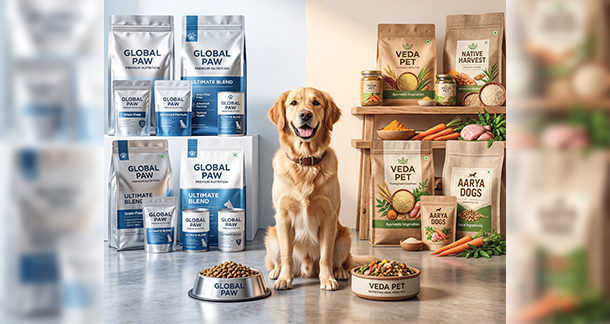
The Indian pet food market has evolved into a high-stakes battleground where global incumbents and local innovators compete for share of bowl. International players such as Mars Petcare (with brands like Pedigree, Royal Canin, Dentastix), Nestlé Purina, and Farmina continue to dominate through deep R&D capabilities, strong veterinary linkages, and integrated global supply chains, ensuring wide availability across modern retail. Further reinforcing the sector’s maturity is the entry of Indian FMCG giants such as Amul, Parle Products, Godrej Group, Emami, and Hindustan Unilever Limited, signaling strong confidence in the category’s long-term scalability and mass-market potential.
India’s homegrown pet food manufacturers, meanwhile, are rapidly scaling by combining local ingredient expertise with modern nutritional science. Drools leads the segment, achieving unicorn status following a strategic investment from Nestlé S.A.. Alongside it, brands such as Henlo, Canine Creek, Petoska, Bowlsome, and Bowler’s Nutrimax are gaining traction across formats. Additional domestic players like Purepet, SmartHeart India, JerHigh India, and Kennel Kitchen are further expanding the competitive base. New entrants such as Carniwel, offering fresh protein formulations, and Paws for Greens, India’s first vegan dog food brand, underscore the category’s diversification across premium, functional, and niche segments. Collectively, these homegrown brands are leveraging agility, price accessibility, and deep understanding of Indian pet preferences to build strong brand equity and increasingly challenge global incumbents.
Market Structure: Pricing and Tiers
Understanding the segmentation is critical for any market entry strategy.
- Price Points: While the Economy segment leads by volume (USD 2,413.24M in 2024-25), the Premium (USD 855.19M) and Super Premium tiers are the fastest growing in terms of value. These segments are the primary targets for brands pushing human-grade and organic innovations.
- Demographic Tiers: Tier 1 cities currently dominate spending (USD 2,612.51M). However, the “next frontier” lies in Tier 2 and 3 cities, where pet ownership is rising faster than the supporting retail infrastructure, creating a massive opportunity for digital-first brands.
In a Nutshell
India’s pet food market is no longer just a supporting segment, it has become the core driver of the entire pet care ecosystem, fueled by rising pet ownership and premium consumption. As consumer preferences shift toward specialized, functional, and indulgent nutrition, high-growth categories like treats and supplements are reshaping value dynamics. Digital commerce and Gen Z-driven humanization trends are accelerating access, especially in Tier 2 and 3 markets. With both global giants and agile domestic players intensifying competition, the sector is poised for sustained, innovation-led expansion.