
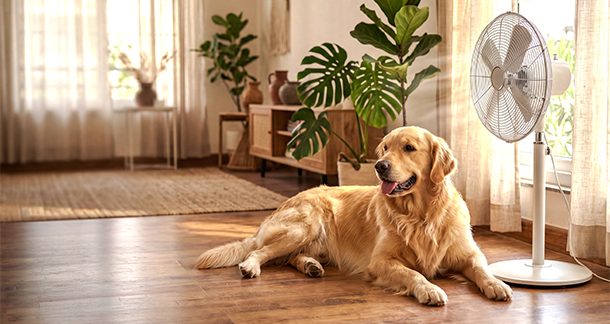
Indian summers have always been tough on pets, but today’s extreme heat waves demand a more careful approach to grooming. In many parts of India, temperatures rise sharply, roads stay hot for hours, humidity becomes uncomfortable, and even evenings do not always bring relief. For pets, this heat is not only tiring but also stressful. It can affect their coat, skin, paws, behaviour, energy levels, and daily comfort.
During a heat wave, grooming should not be seen as a cosmetic service. It becomes part of responsible pet care. A clean, well-maintained coat allows better air movement, helps the pet feel lighter, and makes it easier to notice early signs of skin irritation, ticks, fleas, redness, rashes, or discomfort.
To Shave or Not to Shave?
One common mistake during peak summer is assuming that the shortest haircut is always the best solution. This is not true for every pet.
A pet’s coat has a purpose. In many breeds, especially double-coated dogs, the coat helps protect the skin from direct sun exposure and supports natural temperature regulation.
Shaving such coats too close can expose the skin, increase the risk of sunburn and heat stroke, and sometimes completely alter the natural coat texture.
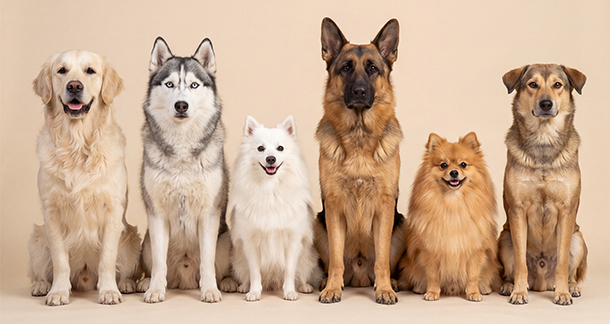
For breeds such as Golden Retrievers, Huskies, Spitz, Pomeranians, German Shepherds, and Indie dogs with dense coats, the focus should usually be on removing dead undercoat, clearing tangles, improving air circulation, and maintaining coat health.
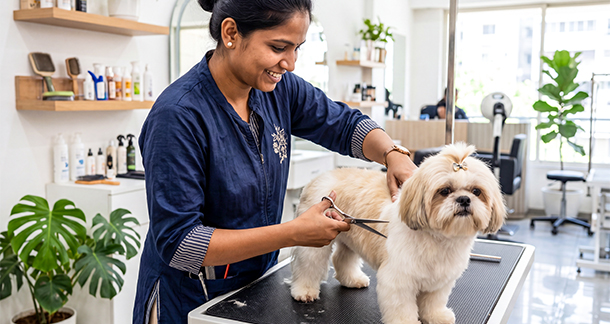
This does not mean every pet should be kept in a long coat. Breeds such as Shih Tzus, Lhasa Apsos, Poodles, Maltese, and similar breeds with continuously growing coats may benefit from practical summer trims. However, the length should depend on the pet’s coat type, skin condition, age, lifestyle, and home maintenance.
The safest grooming decision is not “how short can we go?” It is “what is suitable for this pet?”
The Power of Regular Brushing
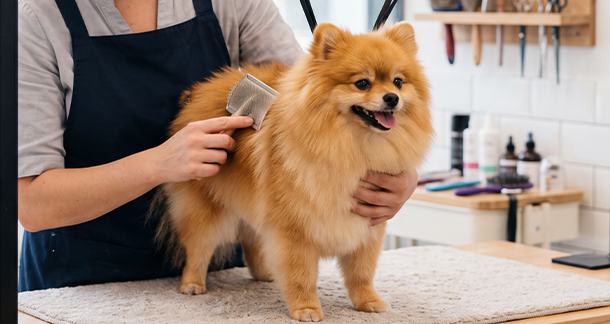
Brushing is one of the simplest and most effective summer habits. When loose hair is not removed, it remains inside the coat and blocks airflow. This can make the pet feel heavier and more uncomfortable.
In humid cities, loose coat and small tangles can also hold moisture close to the skin. Over time, this may lead to itching, odour, redness, hot spots, or skin irritation. If left unchecked, some problems can progress to dermatitis. Pet parents often notice the issue only after their pet starts scratching, licking, biting, or developing a different smell.
For double-coated pets, proper de-shedding removes dead undercoat without damaging the protective outer coat. For long-coated pets, regular brushing prevents matting behind the ears, under the legs, near the tail, around the chest, and under the collar. If a collar is kept on throughout the day, that area should also be checked regularly.
Beyond the Coat
Heat wave grooming is not limited to the visible coat. Some areas need extra attention.
Brachycephalic, or flat-faced, breeds such as Pugs, Bulldogs, Shih Tzus, and Persian cats may have skin folds that collect moisture and dirt. If these areas are not cleaned and dried properly, they can become itchy, red, and uncomfortable, and may also host bacteria or fungi.
Ears should also be checked, especially in pets droopy ears. Heat and humidity can increase odour and discomfort.
Paws need special care in Indian summers. Pets often walk on hot cement, asphalt, and paved surfaces. Paw pads can become dry, rough, or sensitive. Hair between the paw pads can trap dust and reduce grip. Keeping the paw area clean and neatly trimmed helps maintain comfort and hygiene. Well-fitted pet shoes can help during walks on very hot surfaces, provided the pet is comfortable wearing them.
Timing Your Grooming Visits
During a heat wave, grooming appointments should ideally be planned during cooler parts of the day. Pets should not be made to travel in peak afternoon heat unless it is unavoidable.
The grooming space should be calm, clean, well-ventilated, and comfortably cooled. An air-conditioned or properly temperature-controlled salon can make a big difference, especially for senior pets, puppies, flat-faced breeds, and anxious pets.
Drying also needs care. Leaving a thick or long coat damp can create skin issues, but using excessive heat from dryers is equally uncomfortable. A trained groomer understands how to manage drying with the right airflow, temperature, distance, and patience.
Senior pets, puppies, overweight pets, flat-faced breeds, anxious pets, and pets with breathing or heart concerns need extra caution.
Bathing at Home During Heat Waves
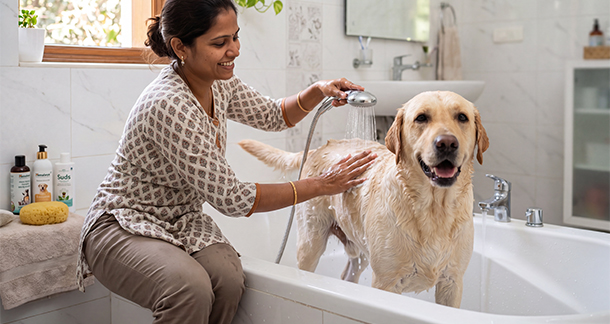
If bathing at home, always check the water temperature before starting the bath. In summer, tap water can become warm or hot, especially in the afternoon. During a heat wave, room-temperature or slightly cool water is safer and more comfortable than warm water. The idea is to clean and comfort the pet, not add more heat stress.
After bathing, proper drying is still important. A damp coat, especially on long- or thick-coated pets, can cause skin discomfort if left unattended.
Watch for Heat Stress
Excessive panting, heavy drooling, weakness, vomiting, red gums, restlessness, confusion, collapse, or unusual dullness should never be ignored. If a pet shows signs of overheating, grooming should be stopped immediately, the pet should be moved to a cooler area, and veterinary advice should be sought without delay.
A cool, wet towel can help while arranging veterinary support, but it should not replace medical attention if the pet appears overheated.
Heat Wave Grooming Checklist
Brush regularly to remove loose coat and dead undercoat.
Check paws after walks, especially after contact with hot surfaces. Avoid grooming appointments during peak afternoon heat.
Keep skin folds, ears, collar areas, and paws clean and dry. Check the bath water temperature before bathing at home. Use the right products for your pet’s coat type.
Watch for excessive panting, red gums, weakness, or unusual dullness. Seek veterinary help immediately if your pet appears overheated.
One Size Does Not Fit All
India’s heat is not the same everywhere. Mumbai’s humidity, Delhi’s dry heat, Rajasthan’s extreme temperatures, and coastal weather all affect pets differently.
This is why grooming cannot be one-size-fits-all. The right plan depends on the pet’s breed, coat, skin, health, age, temperament, and daily routine.
When grooming is done with knowledge and patience, it helps pets stay cleaner, lighter, safer, and more comfortable through the harshest weeks of summer.
By Jessica John
Pet Grooming Mentor & Consultant, Petswag Pet Grooming Salon & Academy