
India has the scientific expertise, manufacturing capability and technological resources to eliminate rabies and effectively manage stray animal populations. The challenge, however, lies not in the availability of solutions but in implementing them through sustained public awareness, coordinated policy and multi-stakeholder collaboration.
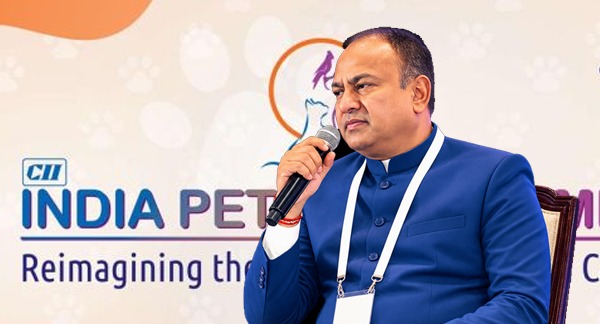
This was the key message conveyed by Dr. K. Anand Kumar, Managing Director, Indian Immunologicals Limited (IIL), during the panel discussion on “From Conflict to Coexistence: Stray Animal Management, Public Health and Animal Welfare” at the India Petcare Summit 2026, organised by the Confederation of Indian Industry (CII).
Participating alongside Maneka Gandhi, senior government officials and industry representatives, Dr. Kumar argued that India already possesses the scientific tools to tackle rabies and other zoonotic diseases. What is needed now, he said, is a stronger commitment to preventive healthcare, awareness, vaccination and coordinated implementation.
Coexistence Begins with Prevention
Opening his remarks, Dr. Kumar underlined that discussions around stray animals are often driven by concerns over dog bites and rabies. However, he urged policymakers to view the issue through the broader lens of public health.
“There is no question that animals and humans have to co-exist,” he said, noting that coexistence is not only possible but essential.
Drawing examples from Thailand and Sri Lanka, he pointed out that several countries have significantly reduced rabies not by eliminating stray animals but by adopting scientific measures such as vaccination, sterilisation and sustained population management.
As a vaccine manufacturer, he stressed that India already has the capability to produce the necessary biological tools domestically.
“The tools are available in India. We have adequate manufacturing capacity for both animal and human vaccines. What we need is better application of these tools.”
He also highlighted the importance of the One Health approach, explaining that protecting animal health is fundamental to safeguarding human health.
“If you have to address human health, definitely you have to address animal health first.”
Prevention Costs Less Than Cure
He observed that despite the availability of affordable animal rabies vaccines, India continues to administer far more human rabies vaccines—a reflection of inadequate preventive vaccination among animals. “The cost of prevention is definitely much, much lower than the cost of treatment.”
According to him, the gap is not due to a lack of vaccines but rather poor awareness, especially in rural areas, where many livestock owners and communities remain unaware of the benefits of preventive vaccination.
To address this challenge, Indian Immunologicals has launched awareness campaigns, including a dedicated digital platform called Fearless Against Rabies, which provides information on rabies prevention, responsible animal care and community awareness.
Kerala CSR Initiative: A Model for the Country
Highlighting the role of industry, Dr. Kumar shared Indian Immunologicals’ ambitious CSR initiative aimed at making Kerala rabies-free.
Initially conceived as a district-level project, the programme has now expanded across the state after encouraging results. “We have been working on this project for the last four years. We have spent more than 6 crore on this programme alone.”
He explained that the initiative goes far beyond vaccinating dogs. It combines mass anti-rabies vaccination with public awareness campaigns, school outreach programmes and counselling for people who have suffered dog bites.
According to Dr. Kumar, the company vaccinates more than one lakh stray dogs every year through its CSR programme while also educating over one lakh schoolchildren on responsible behaviour around dogs.
“It is not just providing vaccination to dogs. We are also educating more than one lakh schoolchildren and counselling many people who have been bitten by dogs.”
He believes educating children is particularly important because awareness at a young age eventually influences families and communities.
Affordable Vaccines Can Change the Landscape
Perhaps the most significant announcement from Dr. Kumar came during his interaction with Maneka Gandhi, who urged pharmaceutical companies to develop affordable vaccines for India’s community dogs.
He acknowledged that veterinary vaccines have gradually become increasingly complex, with many multivalent formulations covering diseases that are not always relevant in the Indian context.
“It should be incidence-based vaccination rather than just adding more and more valencies.”
Dr. Kumar revealed that Indian Immunologicals is now working on low-cost monovalent vaccines, particularly for canine distemper and parvovirus, two of the most common diseases affecting stray dogs.
Such vaccines, he said, would significantly reduce costs for NGOs, municipalities and animal welfare organisations involved in large-scale vaccination programmes.
Responding to Maneka Gandhi’s request for affordable vaccines, he announced: “Although this vaccine is still under development, I’ll announce in this CII forum that I will make this vaccine available.”
The announcement was warmly welcomed by Gandhi, who noted that affordable vaccines could dramatically improve disease prevention among community dogs.
Innovation Beyond Vaccination
Dr. Kumar also spoke about the need to innovate beyond vaccines.
Indian Immunologicals is exploring the concept of portable Animal Birth Control (ABC) units, which can be deployed closer to communities instead of transporting dogs to permanent sterilisation centres.
The objective, he explained, is to improve operational efficiency while reducing stress on animals and making sterilisation programmes more accessible.
A Shared Responsibility
Throughout the discussion, Dr. Kumar maintained that no single institution can eliminate rabies on its own.
Governments, vaccine manufacturers, NGOs, municipalities, educational institutions and communities must work together to build effective vaccination programmes, improve awareness and strengthen infrastructure. “It is not a problem that cannot be solved.”
For Dr. K. Anand Kumar, India’s biggest strength lies not only in its scientific capability but also in its ability to collaborate. With strong vaccine manufacturing, increasing awareness and innovative public-private partnerships, he believes the country has everything it needs to build a future where humans and animals coexist safely.