
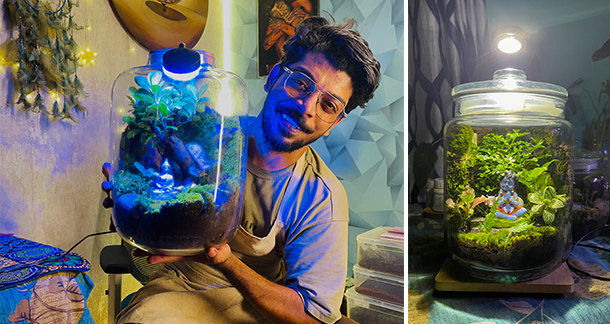
The environments we grow up in play a significant role in shaping our dreams and passions. Living in Kerala, a state deeply intertwined with nature, green landscapes, hills, and cool breezes—especially in the beautiful village of Panakkad in Malappuram—my connection with nature runs very deep. My home and its surroundings were closely connected to nature. The small stream flowing past the side of my house, the fish in it, surrounding forests and trees were my childhood companions. Because of this, I developed a special love and passion for greenery, plants, and living creatures.
From a very young age, I was deeply interested in planting and nurturing flora, enjoying their day-to-day growth, keeping fish in aquariums, breeding them, and watching them grow. Carrying this love for nature in my heart, COVID-19 pandemic hit, shaking the entire world and locking everyone indoors. While those days of confinement were monotonous for many, for me, it was a new beginning. Even during that time, my pastimes were fish and plants. It was during those days that I first came to know about the concept of a ‘Terrarium’ and began researching and learning more about it.
Lessons from Failures
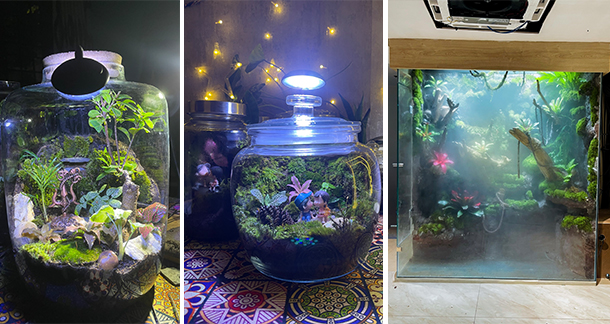
My very first attempt was based entirely on the limited knowledge I had gathered. Naturally, my first terrarium was a complete failure! Most of the plants inside withered away. However, amid that failure, a small miracle happened: a tiny cutting of a money plant that I had placed inside started growing remarkably well without any issues. That sight gave me immense energy. I observed that money plant closely, recognized the mistakes in my first attempt, and started placing new plants again.
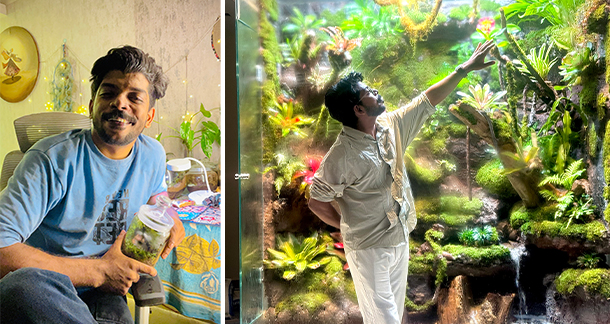
What started as a small hobby soon turned into an obsession. From one to two, and two to three, I ended up crafting numerous terrariums. Gradually, I started changing the size and design of the jars. I introduced various types of plants. Through trial and error and my own hands-on experience, I learned which plants thrived inside a terrarium and which failed. I didn’t imitate anyone else; rather, I grew in this field purely through my own practical experience. Later, during my travels to other places, whenever I came across beautiful small plants or mosses, I would lovingly collect them and install them in a suitable environment within my terrarium creations.
Greenery That Healed the Mind: A Healing Journey
If anyone asks why we should pursue this habit, I would say it serves as a powerful healing process. I went through low phases in my life where I felt overwhelmed, not knew how to overcome it. During those difficult moments, my terrariums became my ultimate sanctuary. Searching for new plants, admiring their growth, and building new setups helped calm my mind, easing my tensions and overthinking. Creating these mini natural worlds inside glass containers served as medicine for my mental well-being.
A Piece of Earth to Love like a Pet
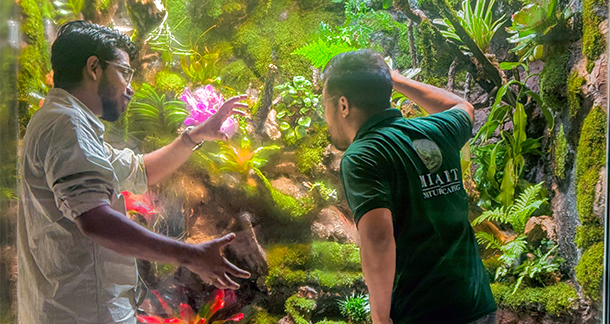
In the beginning, I never thought of this as a business or a source of income. My only joy was gifting my creations to friends and seeing them cherish them in their homes. It has only been about two years since I turned this into an official business. Yet, in this short period, my life has transformed completely—not just financially, but also mentally, through the meaningful connections I have built.
A terrarium is essentially a miniature Earth—a small world built with our own hands! We are the ones who decide when it gets water, when it gets light, and what lives inside it. We provide the care it needs. Therefore, anyone who wishes to own or build a terrarium must understand one fundamental thing: Do not view it merely as an object or a potted plant; view it as a ‘pet’. Care for this ecosystem with the mindfulness that you are its creator.
Plants & Mosses Used in Terrariums & Vivariums
Based on my experience and learning, here is a list of the best plants suited for different types of designs:
1. 10 Ideal Plants for Standard Small Terrariums
1- Fittonia (Nerve Plant): Features vibrant, vein-patterned leaves that add colour to the terrarium
2- Peperomia prostrata (String of Turtles): Displays small, turtle-shell-like foliage.
3- Pilea depressa (Baby Tears): A fast-spreading plant with tiny green leaves.
4- Pilea microphylla: A fern-like plant ideal for filling small areas.
5- Ficus pumila (Creeping Fig): A vine that clings smoothly to glass or driftwood.
6- Cryptanthus (Earth Star): Features attractive, star-shaped foliage in various colours.
7- Syngonium (Mini varieties): Compact Syngonium cultivars with small leaves.
8- Anubias nana (Petite): A hardy, compact plant that thrives in humid, non-submerged conditions.
9- Hemionitisarifolia (Heart Fern): A charming fern with heart-shaped leaves.
10- Begonia sp. (Miniature): Mini begonias featuring beautifully patterned foliage.
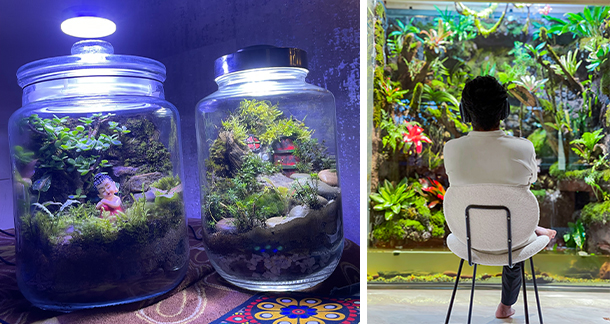
- 10 Ideal Plants for Closed Terrariums
1- Fittoniaalbivenis: Perfect for closed setups requiring constant high humidity.
2- Selaginella uncinata (Peacock Fern): An exquisite fern displaying iridescent blue-green hues.
3- Syngonium ‘Pixie’: A miniature Syngonium with controlled growth.
4- Bucephalandra species: Extremely resilient plants that thrive in high-humidity environments.
5- Peperomia caperata: Deep-toned, textured leaves that add depth.
6- Philodendron ‘Burle Marx’ (Baby/Tissue Culture): Clings and grows exceptionally well in high humidity.
7- Marcgraviarectifolia: A vining plant that climbs elegantly along the walls of closed jars.
8- Ludwigia repens (terrestrial form): Grows beautifully when provided with shade and moisture.
9- Microsorumpteropus (Java Fern – Mini): A lush fern that flourishes in humid enclosures.
10- Neoregelia (Mini Bromeliads): Mini bromeliads that hold water in their central rosettes, serving as a focal point in closed systems.
A Message for Tomorrow’s Generation
In today’s digital era, both children and adults face immense stress and overthinking. For young minds glued to screens and adults caught in the fast pace of daily life, connecting with this green habit can be a deeply comforting asset. Instilling a love for nurturing these living mini-worlds in children from a young age fosters empathy, compassion for living beings, and a strong sense of responsibility.
The greenery we build inside a glass vessel is not merely a decorative item; it is a powerful healing tool that brings calm and tranquillityto the human mind. For anyone experiencing emotional or mental struggles, it offers a path to reconnect with oneself and heal. As we learn to love nature and responsibly protect its biodiversity, I share my knowledge and experiences with the sincere hope and wish that everyone embraces this culture in their homes and lives. Know nature, feel it… and it will shower love back upon you endlessly!