
Abstract
Reproductive tract infections and septic conditions are among the most critical disorders affecting female companion animals, particularly dogs and cats. Uterine diseases such as pyometra, metritis, and endometritis frequently lead to systemic toxemia, immunosuppression, and life-threatening complications. While conventional veterinary medicine relies heavily on antimicrobial therapy and surgical intervention, there is growing clinical recognition of the role of supportive homeopathic formulations in enhancing immune response, improving tissue recovery, and supporting overall systemic balance. SEPTOVAT, a scientifically structured homeopathic veterinary formulation from P S VAT PHARMA, combines Echinacea and Arnica Montana to provide immune modulation, anti-inflammatory support, and tissue restorative action in pet animals. This article presents an in-depth scientific discussion on its formulation rationale, pharmacodynamic concepts, clinical relevance, safety, and role in integrative veterinary practice for dogs and cats.
- Background and Clinical Significance
The rising emphasis on companion animal health has significantly advanced veterinary diagnostics and treatment modalities. However, uterine infections in dogs and cats remain a major clinical concern, particularly in intact females. Pyometra is one of the most commonly diagnosed reproductive emergencies in small animal practice and is associated with high morbidity if not managed promptly.
The pathophysiology of uterine infections involves bacterial colonization of the uterine lumen, inflammatory exudate accumulation, hormonal influence (especially progesterone), and subsequent systemic dissemination of bacterial toxins. As the condition progresses, affected pets may exhibit lethargy, anorexia, fever, vomiting, polydipsia, polyuria, and signs of systemic inflammatory response syndrome (SIRS).
Septic conditions arising from uterine infections or other infectious foci further complicate clinical outcomes, often placing additional strain on hepatic, renal, and cardiovascular systems. In such scenarios, supportive therapies that enhance immune response and assist physiological recovery become critically important.
- Integrative Veterinary Approach and Homeopathy
Modern veterinary medicine increasingly embraces integrative treatment models, combining conventional interventions with complementary therapies to improve patient outcomes. Homeopathy, when used responsibly and scientifically, offers several advantages:
- Gentle stimulation of the body’s self-healing mechanisms
- Minimal risk of adverse effects
- Compatibility with conventional pharmacotherapy
- Suitability for long-term and supportive use
Homeopathic formulations are particularly valuable in pets requiring prolonged recovery support, post-surgical rehabilitation, or immune enhancement during systemic illness.
- Product Overview
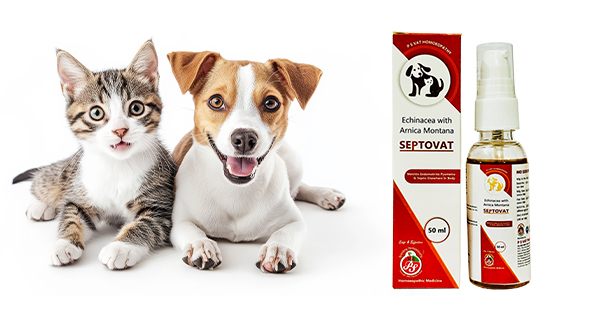
SEPTOVAT, developed and marketed by P S VAT PHARMA, is a veterinary homeopathic oral liquid spray formulated specifically for dogs and cats.
Composition:
- Echinacea
- Arnica Montana
Dosage Form: Oral Liquid Spray
Pack Size: 50 ml
Target Species: Dogs and Cats
Route: Oral
The spray formulation allows accurate dosing, ease of administration, and improved compliance—especially in cats and stressed or debilitated animals.
- Scientific Rationale of Ingredients
4.1 Echinacea – Immune Defense and Septic Modulation
Echinacea has a long-standing reputation in homeopathic and integrative medicine as a remedy for septic and infective states. It is particularly indicated where the organism demonstrates:
- Reduced immune responsiveness
- Tendency toward septicemia
- Chronic or recurrent infections
- Poor tissue regeneration
In canine and feline uterine infections, immune dysfunction plays a central role in disease severity. Echinacea supports physiological immune balance, assists detoxification processes, and helps the organism respond more effectively to infectious challenges.
Homeopathically, Echinacea is associated with improving vitality and resistance, making it valuable in pets suffering from systemic weakness and prolonged inflammatory states.
4.2 Arnica Montana – Inflammation Control and Tissue Restoration
Arnica Montana is one of the most extensively utilized remedies in veterinary homeopathy. Its therapeutic relevance extends beyond trauma to include internal inflammatory conditions and tissue damage.
In dogs and cats, Arnica is indicated for:
- Inflammatory congestion
- Tissue injury due to infection
- Post-operative recovery
- Pain and soreness related to internal inflammation
In uterine pathology, inflammatory damage compromises tissue integrity and delays recovery. Arnica Montana assists in restoring normal tissue physiology, reducing vascular congestion, and promoting healing without causing pharmacological stress.
- Therapeutic Indications in Pet Animals
SEPTOVAT is indicated as supportive homeopathic therapy for dogs and cats in:
5.1 Reproductive Disorders
- Pyometra (open and closed)
- Metritis
- Endometritis
- Post-partum uterine infections
- Delayed uterine involution
- Uterine inflammation following abortion or dystocia
5.2 Systemic and Septic Conditions
- Septicemia
- Toxemic states
- Systemic inflammatory response
- Septic conditions originating from uterine or extra-uterine sources
- Mechanism of Action
SEPTOVAT functions by stimulating endogenous regulatory mechanisms in accordance with homeopathic principles.
6.1 Key Actions
- Modulation of immune response during infection
- Support of systemic resistance in septic states
- Assistance in uterine tissue repair and recovery
- Reduction of inflammatory stress
- Improvement in vitality, appetite, and behavior
The combined action of Echinacea and Arnica Montana provides a comprehensive therapeutic approach by addressing both systemic infection and local tissue pathology.
- Clinical Utility in Small Animal Practice
In small animal clinics, uterine infections often necessitate immediate intervention. SEPTOVAT may be used as supportive therapy:
- Alongside antibiotics and fluid therapy
- During post-surgical recovery following ovariohysterectomy
- In chronic or recurrent uterine inflammation
- In pets requiring gentle, long-term immune support
Its oral spray format is especially advantageous in cats and small dogs, reducing administration stress and improving compliance.
- Safety and Tolerability Profile
SEPTOVAT demonstrates excellent tolerability in dogs and cats.
- Non-toxic formulation
- Safe for repeated and prolonged use
- Compatible with conventional medications
- Suitable for geriatric and debilitated pets
- No known adverse interactions
This safety profile makes it suitable for integrative and long-term supportive protocols.
- Role of P S VAT PHARMA
P S VAT PHARMA is dedicated to developing scientifically structured, high-quality homeopathic veterinary products. The company focuses on rational formulation, quality manufacturing, and therapeutic reliability. SEPTOVAT reflects P S VAT PHARMA’s commitment to advancing companion animal healthcare through safe, effective, and integrative homeopathic solutions.
- Discussion
The increasing incidence of uterine infections and septic conditions in dogs and cats underscores the need for comprehensive therapeutic strategies. SEPTOVAT provides a rational homeopathic option that complements conventional veterinary care by enhancing immune response and supporting tissue recovery. Its formulation aligns with contemporary integrative veterinary practices and addresses the growing demand for safe supportive therapies in pet medicine.
- Conclusion
SEPTOVAT, marketed by P S VAT PHARMA, represents an advanced homeopathic veterinary formulation designed exclusively for dogs and cats. By combining immune-modulatory and tissue-restorative remedies, it offers effective supportive management of uterine infections and septic conditions. Its safety, ease of administration, and compatibility with conventional treatments make it a valuable addition to modern small animal veterinary practice.
By Akshay Prakash