
Guinea pigs, also known as cavies, are gentle, affectionate, and highly social pets that thrive in environments designed to meet their unique needs. Building a suitable home for them is not simply about providing shelter but about creating a space where they can feel safe, comfortable, and enriched. Unlike some smaller rodents, guinea pigs require larger enclosures, careful consideration of materials, and thoughtful placement within the home. When their living environment is designed with their natural behavior in mind, guinea pigs live healthier, happier lives, rewarding their caretakers with endearing companionship.
The size of the enclosure is the first and most important aspect of creating a guinea pig home. Pet shops often sell cages marketed for guinea pigs that are far too small, leading to cramped conditions, stress, and health problems. Guinea pigs are active animals that require space to run, explore, and interact with one another. The general rule is that bigger is always better, and a home should provide generous square footage depending on the number of guinea pigs being housed. Two guinea pigs need at least a modest but comfortable space, while three or four require significantly more room. In practice, this means that large, open enclosures built with adaptable materials are far better than the traditional small cages often available commercially.

When deciding on the type of housing, owners have several choices, each with its own advantages. C&C cages, made from wire storage grids and lined with a coroplast base, are one of the most popular options because they are spacious, customizable, and relatively inexpensive. These cages offer excellent ventilation and can easily be expanded to accommodate additional guinea pigs in the future. Wooden hutches are another option and can be placed indoors or outdoors, though they must be carefully managed to prevent issues with odor, cleaning, and weather exposure. Some owners prefer simple indoor playpens built from grids or lightweight fencing, which allow guinea pigs the freedom to move in a large area while still remaining secure. Regardless of the type chosen, what matters most is that the structure is safe, solid, and easy to clean.
The floor of a guinea pig home deserves special attention. Wire-bottomed cages are harmful because they put pressure on delicate feet and cause sores, so a solid floor is essential. This solid base should then be lined with appropriate bedding that keeps the enclosure clean and comfortable. Fleece liners have become a favorite among many guinea pig owners, as they wick away moisture, are soft underfoot, and can be washed and reused. Others prefer disposable paper-based bedding, which is absorbent and convenient. Aspen shavings can also be used as a safe wood-based option, though pine and cedar are harmful because of the oils they release. Whichever bedding is chosen, it should provide a thick, absorbent layer that allows guinea pigs to move comfortably while reducing odor and moisture build-up.

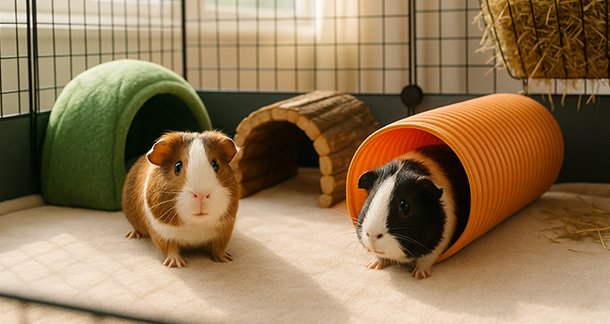
A guinea pig’s home is not complete without the accessories that make it both functional and enriching. These animals are prey creatures by nature and therefore need places to hide and feel secure. Tunnels, wooden houses, igloos, and even cardboard boxes make excellent hideouts. Heavy ceramic food dishes prevent tipping, while water bottles or sturdy bowls ensure a constant supply of fresh water. Because hay makes up the majority of their diet, hay racks or feeders are important for keeping it accessible and clean. In addition, toys and chew items such as wooden blocks or cardboard tubes help satisfy their natural chewing instincts and keep their continuously growing teeth in check. Providing multiple hideouts, feeding stations, and enrichment pieces reduces competition and stress, particularly when housing several guinea pigs together.
Location within the home also plays a critical role in building the right environment. Guinea pigs are sensitive to temperature extremes and should be housed indoors where conditions are stable. They thrive at moderate temperatures, generally between 18 and 24 degrees Celsius, and they should never be exposed to direct sunlight, drafts, or excessive humidity. Placing their enclosure in a room where family members spend time helps them feel part of the household, as they are social animals that enjoy the presence of people. However, they should not be kept in spaces that are overly noisy or chaotic, as this can cause stress. Striking the right balance ensures they feel both safe and engaged.

Cleaning and maintenance are ongoing responsibilities that cannot be overlooked. A clean environment directly translates to healthy guinea pigs. Daily spot cleaning is necessary to remove soiled bedding, uneaten food, and waste, while weekly deep cleaning ensures that the entire enclosure remains fresh. Bedding should be replaced regularly, food and water containers washed thoroughly, and fleece liners laundered with mild, fragrance-free detergents. Establishing a consistent cleaning routine prevents odors and protects guinea pigs from respiratory or skin issues that often arise in poorly maintained habitats.
Beyond the physical setup, building a home for guinea pigs is about enrichment and daily stimulation. These animals enjoy exploring new layouts and thrive when provided with toys, tunnels, and rearranged cage features that spark curiosity. Regular floor time outside the enclosure in a guinea pig-proofed area gives them the opportunity to exercise and interact more freely. Such playtime strengthens the bond between owner and pet while also supporting their physical health. Rotating toys and occasionally changing the placement of hideouts and feeding areas keeps the environment engaging and prevents boredom.

In the end, constructing a home for guinea pigs goes far beyond building a simple cage. It is about creating a thoughtfully designed habitat that provides safety, comfort, and stimulation. By focusing on space, bedding, accessories, enrichment, and location, owners can ensure their guinea pigs live in conditions that reflect their natural instincts and needs. A well-planned home allows guinea pigs to express their playful and affectionate personalities fully, rewarding their caretakers with endless joy. With the right environment, guinea pigs flourish, proving that when we invest effort into their well-being, the result is a harmonious and enriching relationship that lasts for years.
About Author
By Simran Sharma