
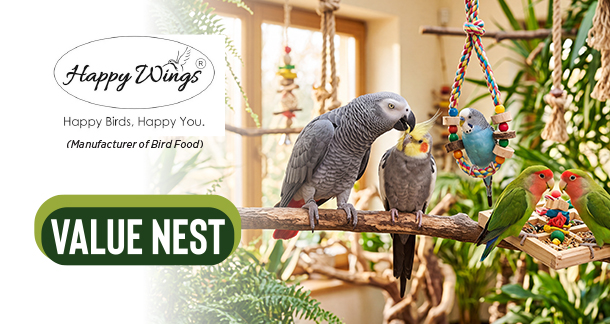
Birds are among the most cognitively sophisticated animals kept as companions, and increasingly, science is confirming what many bird keepers have long suspected: social connection and mental engagement aren’t luxuries for birds, they’re biological necessities. Whether it’s a parrot, a finch, or a backyard chicken, the well-being of a bird depends heavily on how much it interacts with others and how much its mind is challenged.
The Social Nature of Birds
Most companion bird species, parrots, cockatiels, budgerigars, and lovebirds among them, are flock animals by evolutionary design. In the wild, they live, forage, and roost in groups, relying on constant social feedback for safety, communication, and emotional regulation. This deep-rooted flock instinct doesn’t disappear in captivity. A bird kept alone, without adequate social contact from either its own species or a bonded human companion, can develop signs of distress: excessive vocalization, feather plucking, aggression, or withdrawal.
Social interaction for birds isn’t just about companionship in the abstract sense. It fulfills specific needs, allopreening (mutual grooming), vocal exchange, and cooperative problem-solving are all normal flock behaviours that keep a bird’s nervous system regulated. When these outlets are missing, birds often redirect that social energy in destructive or self-harming ways.
Cognitive Complexity and the Need for Stimulation
Birds, particularly parrots and corvids, rank among the most intelligent non-mammalian animals on the planet. Studies on species like African grey parrots and New Caledonian crows have demonstrated tool use, problem-solving, and even rudimentary numerical understanding. This level of cognitive capacity means that a bird’s brain requires ongoing engagement to stay healthy , much like a human mind needs novelty and challenge to avoid stagnation.
In captivity, without deliberate enrichment, birds can become bored quickly. Boredom in birds doesn’t look like idle rest; it often manifests as repetitive behaviours (pacing, bar-biting, feather destruction), apathy, or sudden aggression. These are red flags that a bird’s environment isn’t meeting its cognitive needs.
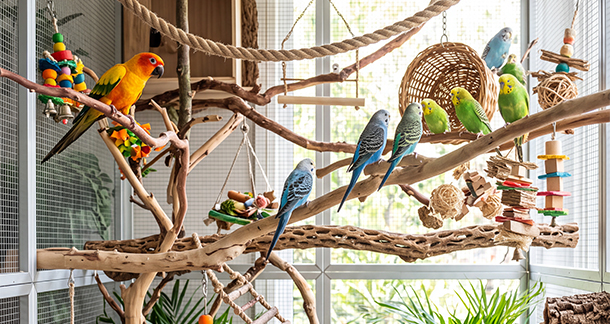
Practical Ways to Support Socialisation and Enrichment
Foraging opportunities: In the wild, birds spend a significant portion of their day searching for food. Puzzle feeders, hidden treats, and foraging toys mimic this natural behaviour and keep the mind occupied productively.
Rotating toys and novel objects: Introducing new textures, shapes, and materials and rotating them regularly, prevents habituation and keeps curiosity alive. Items as simple as untreated wood, paper to shred, or safe household objects can offer stimulation.
Training and interaction: Positive-reinforcement training isn’t just for teaching tricks, it’s a powerful bonding and cognitive exercise. Even short daily sessions build trust and give the bird’s brain a task to focus on.
Companionship: Where appropriate for the species and individual bird, having a compatible companion bird can fulfill social needs a single human caretaker cannot replicate, particularly the physical and vocal cues birds use with one another.
Environmental variety: Access to natural light, outdoor time (safely supervised), and varied perches encourages physical movement and sensory engagement, both of which support mental health.
The Cost of Neglecting These Needs
When social and cognitive needs go unmet, the consequences are well documented: chronic stress, weakened immune function, self-mutilation, and shortened lifespan in extreme cases. These aren’t simply behavioural quirks, they are welfare issues rooted in unmet biological needs.
Conclusion
Understanding birds as socially complex, intelligent creatures reframes how we think about their care. Feeding and housing a bird is only the baseline. True welfare means recognising that a bird’s mind and social world are just as vital as its physical health, and treating enrichment and companionship not as optional extras, but as essential components of responsible bird keeping.