
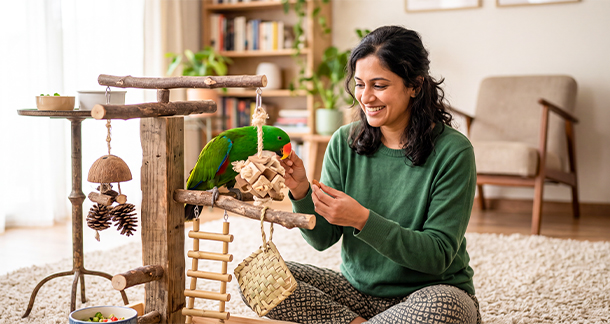
Birds are among the most cognitively sophisticated animals we share our homes with, yet their psychological needs are often underestimated. Whether it’s a backyard flock, a companion parrot, or a rescued cockatiel, birds require far more than food and shelter to thrive. Two pillars of avian welfare stand out above the rest: social connection and mental stimulation. Without them, even a physically healthy bird can develop serious behavioral and emotional problems.
Why Social Interaction Matters
Many popular pet bird species such as parrots, cockatoos, African greys, and lovebirds among then, are flock animals by nature. In the wild, they spend their days surrounded by dozens or even hundreds of others, communicating constantly through calls, body language, and preening rituals. This social fabric isn’t a luxury; it’s central to how these species regulate stress, learn, and feel secure.
When a bird is kept alone without adequate interaction, it may begin to treat its human caretaker as its sole flock member. This can lead to intense bonding, but also to separation anxiety, feather plucking, and excessive vocalization when that person is away. Conversely, birds that are ignored entirely may become withdrawn, fearful, or aggressive. Regular, gentle interaction, talking to the bird, hand-feeding treats, or simply sitting nearby while it goes about its day, helps satisfy this deep-seated need for companionship without creating unhealthy dependency.
For households with multiple birds, compatibility matters. Not all species get along, and even birds of the same species can clash over territory or resources. Slow, supervised introductions and enough space for each bird to retreat are essential for peaceful cohabitation.
The Cognitive Lives of Birds
Birds, particularly parrots and corvids, rank among the most intelligent animals on the planet. Studies have shown some species can solve multi-step puzzles, use tools, and even grasp basic numerical concepts. This intelligence comes with a cost: boredom. A bird left in a bare cage with nothing but a perch and a food dish is, cognitively speaking, understimulated and understimulation often manifests as destructive or self-harming behavior.
Foraging toys are one of the simplest and most effective tools for mental enrichment. In the wild, birds spend a significant portion of their day searching for and processing food. Puzzle feeders, shreddable treat wraps, and hidden-food toys recreate this challenge, engaging problem-solving skills and giving birds a sense of purpose.
Rotating toys regularly prevents habituation, where a bird simply stops noticing an object it sees every day. Introducing new textures, wood, leather, paper, natural branches, also encourages the natural behavior of chewing and shredding, which is both mentally engaging and important for beak health.
Training sessions, even short ones, offer another powerful form of enrichment. Teaching a bird to step up, target a stick, or perform simple tricks builds trust and gives the bird’s mind a workout. Positive reinforcement methods, using favorite treats or praise, tend to work far better than dominance-based approaches, which can damage trust and increase anxiety.
Bringing It Together
Ultimately, social connection and mental stimulation aren’t separate needs, they reinforce each other. A bird that interacts regularly with its caretaker and has access to varied, engaging activities is far less likely to develop the anxiety, aggression, or self-destructive habits that plague neglected birds. Investing time in conversation, play, and problem-solving isn’t just enrichment; it’s a fundamental part of responsible bird care, and it pays off in a calmer, healthier, and more trusting companion.