
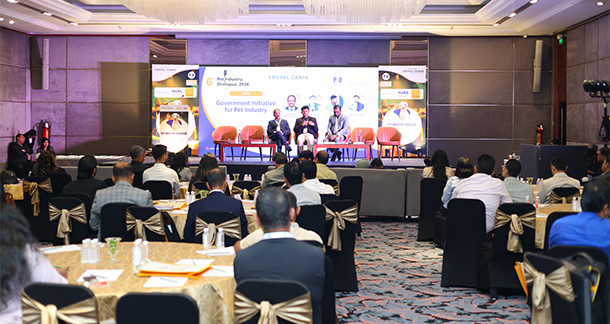
The 6th Pet Industry Dialogue, India’s foremost conference on the pet industry, brought together 258 domestic delegates and international delegates from 10 countries, along with key policymakers, CEOs, entrepreneurs, and industry stakeholders, to deliberate on the nuances of the Indian pet industry while fostering an ecosystem for future generations.
Here are the key takeaways from the sessions:
Key Takeaways from Engagement with Government Officials namely Dr Naveena B. Maheswarappa, Animal Husbandry Commissioner and Dr. Debasish Mahalik, Scientist-C/Deputy Director, Food & Agriculture Department, BIS
Government Assistance:
- Key financial support includes the Animal Husbandry Infrastructure Development Fund (3% interest subvention for manufacturing, laboratories, or waste utilization projects) and a new state-level capital infrastructure scheme (₹100–300 crore per state) that can fund private clinics, diagnostic labs, or pet food facilities.
- The Department of Animal Husbandry and Dairying has rolled out minimum infrastructure standards and is building a national accreditation framework for private veterinary clinics and diagnostic labs, the front line of pet healthcare delivery.
Suggestions:
- Unlike livestock sectors built on livelihood, companion animals represent biological bonding and emotional attachment. Success in this space should be measured not by sales figures but by welfare standards, food safety, and consumer trust.
- With India adding 3–5 lakh new pets annually, the current pool of 50,000 veterinarians falls dramatically short of the estimated 1.2 lakh required. New certified paraprofessional diploma courses are being introduced to formalize grooming, boarding, and training roles currently operating informally.
- India produces the world’s largest milk supply and ranks among the top producers of poultry and meat, yet exports the resulting by products cheaply as raw rendered meal, only to re-import them as finished pet food. Domestic manufacturing investment could reverse this cycle and position India as a global pet food exporter.
- Growth strategy must extend to tier-2 and tier-3 cities, expand focus to include cats alongside dogs, and champion indigenous breeds such as the Mudhol Hound and Himachali Hound, for their climate resilience and disease tolerance over imported alternatives.
- With India targeting a rabies-free status by 2030, urgent gaps remain in companion-animal disease surveillance, antimicrobial resistance management, and pet waste disposal, both public health imperatives and untapped business opportunities.
- While imports are governed by sanitary certification through Animal Quarantine Certification Stations (21-day quarantine, sample testing), domestic pet food manufacturing currently operates only under voluntary standards, creating inconsistency in labeling and nutritional claims.
- Because pet food sits between “feed” and “food” classifications, the Department of Animal Husbandry, the Food Safety and Standards Authority of India (FSSAI), and the Bureau of Indian Standards (BIS) are in active discussion to determine which body will develop and enforce mandatory pet food standards.
- The pet food standard is being updated to separate nutritional requirements by life stage (growth vs. adult maintenance), add toxin and microbiological limits, and harmonize with US and European standards, so Indian manufacturers meet export requirements by default.
- Import or manufacture of vaccines, diagnostics, feed ingredients, and pet food ingredients requires approval from this committee (meeting every 15 days), operating through subcommittees split between veterinary biological and feed/food ingredients.
- The regulatory view frames quality standards as essential for scaling manufacturing and enabling exports, since mandatory conformance (via a Quality Control Order and ISI mark) would apply equally to domestic and imported products, leveling the playing field.
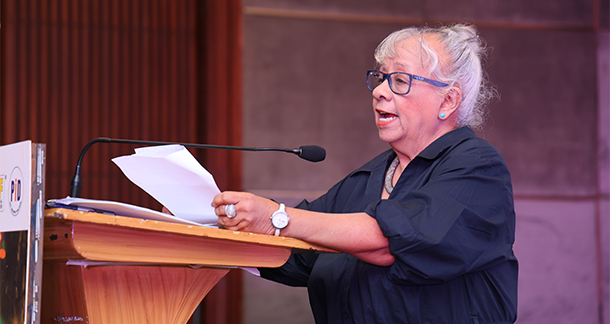
From Leftovers to Lifestyle: India’s Pet Food Journey
Key takeaways from the historical retrospective by Dr. Dhananjay Pundit, President, R&D, Freedom Pharmaceuticals
- The country’s pet food story begins with Glenand, a dog biscuit named after two dogs, Glenn and Eddie, belonging to a departmental store owner in MG Road. It marked the first food product made specifically for dogs in India, decades before pet care existed as a category.
- Petcare company’s founder experimented with pellet technology already used for cattle and poultry feed, adapting it to produce India’s first extruded dog food, a technical leap that laid groundwork for modern kibble manufacturing in the country.
- In the early 1990s, a young entrepreneur trained in canine nutrition in the US returned with a single 40-pound bag of imported dog food, repackaged it into half-kilo samples, and distributed them to breeders and vets and formed grassroots market test with no corporate research behind it.
- Through the 1990s, importing pet food meant navigating 47% duty, a 100-ton annual cap, and heavy licensing bureaucracy. Regulatory easing came gradually, first with a duty reduction to 30%, then the shift to Open General License in 1998, enabling wider market entry.
- With almost no organized retail or willing veterinarian prescribed in the late 1990s, the industry grew by sponsoring dog shows and converting breeders into de facto distributors, demonstrating visible results in coat condition, stamina, and puppy development to build trust from the ground up.
- Constrained by import quotas, early players allocated a portion of limited stock to kitten formulas, inadvertently creating India’s first dedicated cat food market alongside the dog-led growth.
- The Open General License era brought global brands into Indian shelves, while the 2010s saw pets move fully into family life, from guard animals to household companions sharing beds and daily routines, reflecting a broader cultural shift now driving premiumization.
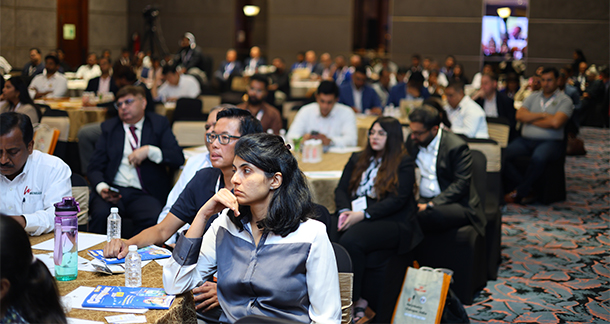
Pet Care Landscape in India: Tier Two & Tier Three Markets Panel
Key takeaways from the industry leaders’ panel – Satinder Singh, GM – Royal Canin, Manish Syag, Managing Director of India, Mars Pet Care India, Dr. Shashank Sinha, CEO, Drools Pet Food Pvt Ltd., Varun Sharma, Co-Founder – GNV Commodities Pvt Ltd., Bharat Pittie, Director – Orange Pet Nutrition Pvt Ltd.., Pallavi Anand, Business Head – Nestlé Purina Pet Care, South Asian Region moderator Dr. Saurabh Shekhar, Managing Partner- Pet Care, Wipro Consumer Care and Lighting
• Tier 2 and 3 towns contribute close to 40% of India’s GDP, on par with tier-1 cities, and are already delivering faster industry growth rates off a smaller base. The Indian consuming class, 65 million households earning above $15,000 annually is spread across roughly 200 cities, not confined to metros.
• Rising disposable income and fast-democratizing digital access mean smaller-town consumers can reach the same information and products as metro pet parents. The industry’s stated goal is consistent nutrition, trust, and access regardless of location.
• Panelists describe smaller-town pet parents as unusually engaged and eager for information, often more receptive than time-starved metro consumers, with e-commerce and quick commerce closing the product-access gap that once separated big cities from small towns.
• With pet food penetration still below 10% of households, the panel repeatedly stressed that scale won’t come from more players alone, it depends on building consumer trust through science-backed claims, transparent labeling, and consistent quality.
• India has roughly 15,000 pets per veterinarian, compared to about 1,000 in the US and 1,300 in Europe. Veterinary curricula have also historically focused on livestock rather than companion animals, leaving a training gap the industry is trying to fill through hands-on programs.
• Pet ownership sits around 10-11% of Indian households today, with significant headroom to double. Alongside this, rising per-capita spending offers a second growth path, but panelists cautioned that unchecked growth in pet population without better breeding standards risks shorter lifespans and rising genetic disease.
• Strong parallels were drawn between the two categories: a consumer who cannot speak (pet or baby), a caregiver making decisions, and influencers (vets/pediatricians) driving trust. Unlike baby care’s 15–20 year build-up, pet care is expected to reach similar maturity in a fraction of the time, accelerated by e-commerce and AI.
• Several panelists flagged a lack of trained, category-experienced talent, with high job-hopping between companies as a bigger near-term bottleneck than product or capital, and called for greater industry investment in people who understand the space.
Cracking the Code of Growing Pet Parents in India
Key takeaways from the panel with Andrea Cyrill Khurana, Founder – Petsburgh & PPGAI, Srikanth Ramaswamy, PSR Sales & Marketing Director, Royal Canin, Viren Sharma, Managing Director at International Dog Bazar, Adnaan Khan, Founder of K9 School, Moderator- Tejas Parulekar, Co- Founder of Saffron Stays
• India is home to an estimated 75+ million potential middle-income pet parents, yet actual ownership levels stay well below this ceiling, with no formal census of dogs or cats in the country, current figures rely on estimates from agencies like Euromonitor.
• Over the past decade, standalone pet stores grew from roughly 3,000 to over 10,000 pet-specialty stores nationwide, increasingly bundling veterinary services, grooming, and retail under one roof rather than functioning as product-only outlets.
• Ownership perception has shifted from dogs being tied up outside like property, to status symbols, to today’s framing as family members, yet many owners still resist treating dogs according to their natural behavioral needs, creating friction between emotional attachment and responsible care.
• While veterinarians, trainers, and business owners increasingly pursue international certification, the ground-level staff who directly handle animals in clinics and grooming spas often have no formal training or vetting, a risk flagged as a reputational liability for the industry as it scales.
• Search engines have overtaken traditional word-of-mouth as the primary source pet owners turn to for advice, with social media and online research increasingly shaping and sometimes distorting, how new pet parents make decisions.
• The pandemic drove a surge in impulsive pet acquisition followed by a wave of abandonment once lockdowns lifted; dogs acquired during that period are now reaching adulthood with documented socialization gaps, contributing to rising cases of anxiety and reactivity.
• Negative media coverage around stray dog incidents and breed-specific bans triggered a wave of abandonment and public hostility toward pet ownership, underscoring how vulnerable the sector is to narrative shifts, and the need for large, credible brands to lead public education efforts.
• Panelists converged on a common view: rather than competing over today’s market, the industry’s collective goal should be expanding the overall pool of pet parents, doubling India’s pet population from an estimated 46 million dogs and cats through better education, reduced fear around ownership, and stronger physical touchpoints for adoption.
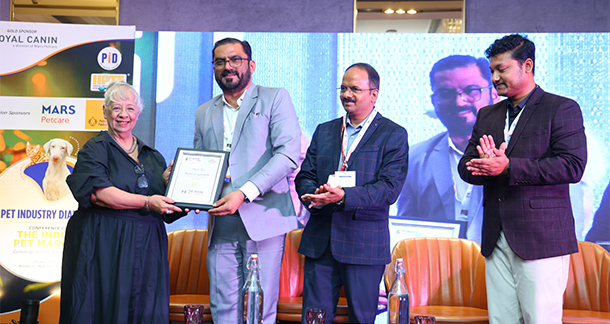
How Mars Is Building Better Cities for Pets, with C40
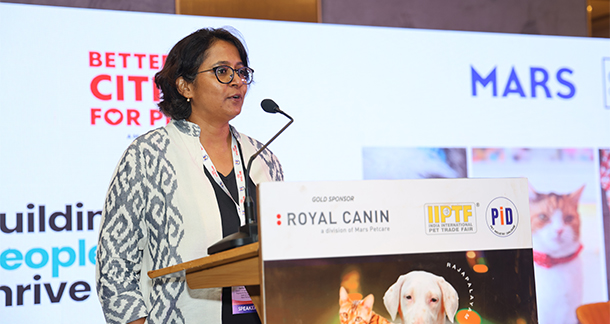
Key takeaways from Sarika Chakravarty, Director of Implementation for the Regional & Mayoral Engagement Team at C-40 Cities
• The Better Cities for Pets program, run by Mars Petcare in partnership with C40 Cities, works to expand pet-friendly parks and public spaces across five global cities, London, Bangkok, Los Angeles, São Paulo, and Bangalore, by embedding pet parents and pets within the standard definition of urban inclusivity alongside women, children, the elderly, and people with disabilities.
• C40 is a network of nearly 97 major global cities representing roughly one-twelfth of the world’s population and a quarter of global GDP, working across sectors like transportation, waste management, and urban planning, the pet-friendly parks initiative marks an expansion of this mandate into companion-animal infrastructure.
• Bangalore joined the program to develop city-level guidelines for climate-resilient, pet-inclusive parks, with the explicit goal of eventually replicating the model across other Indian cities once proven.
• The Bangalore framework centers on fit-to-purpose park infrastructure, climate resilience, accessibility and inclusion, pet-friendly design (including designated pet zones and non-toxic native plantings), and long-term monitoring and maintenance protocols.
• Rather than developing isolated model parks, the program’s strategy is to get its guidelines formally adopted by city government, making pet-friendly design mandatory for all future park development and renovation carried out by municipal horticulture departments.
• Beyond recreation, green spaces are positioned as critical infrastructure for mitigating urban heat and supporting rainwater percolation, meaning pet-friendly park design is framed as advancing both climate resilience and social inclusion simultaneously.
The Middle East & North African Pet Market: Opportunity for Indian Manufacturers
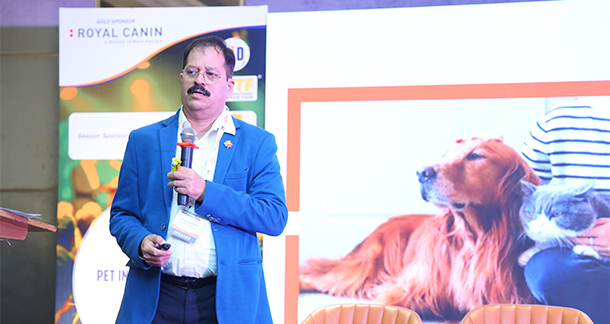
Key takeaways from the presentation by Sidarth Mahindra, Founder, Pet Corner LLC
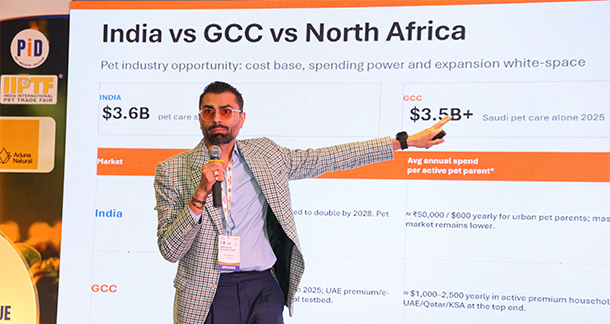
- Saudi Arabia alone, with just 30 million people, generates an estimated $3.5 billion in pet market value, nearly matching India’s ~$3.6 billion market despite India’s population being over 50 times larger; GCC-wide figures are projected to reach $7 billion by 2026.
- Average annual pet spent in the Middle East ranges from $1,000–2,500, compared to roughly $600 in India, a 3-4x difference, with North Africa (Morocco, Egypt) averaging around $800.
- While India’s pet population skews roughly 87% dog to 9% cat, the GCC and North Africa run in the opposite direction, with cats making up about 65% of pets and Saudi Arabia showing notably high bird ownership (~22%), suggesting India’s cat segment has substantial headroom to grow.
- Under the India-UAE CEPA framework and the emerging India-Middle East-Europe Economic Corridor (IMEC), goods manufactured in either country moving between them can qualify for 0% tariffs, creating an opportunity for Indian pet food and product manufacturers to establish UAE production and re-export across the GCC and into Europe.
- Rather than Indian brands independently setting up UAE operations (estimated to cost around $1 million annually to sustain), Pet Corner is offering warehousing, distribution, retail access, and e-commerce listing at no upfront cost, with brands only needing to invest in inventory.
- Around 60% of Middle East pet industry revenue now flows through e-commerce, with the UAE positioned as an early adopter of AI and quick-delivery logistics, some regional quick-commerce platforms have already reached unicorn valuations.
- 2025–2026 has been described as “the year of the turtle,” with small animals, reptiles, and aquatics driving outsized revenue growth globally, an emerging category India
Growing the Healthcare Ecosystem
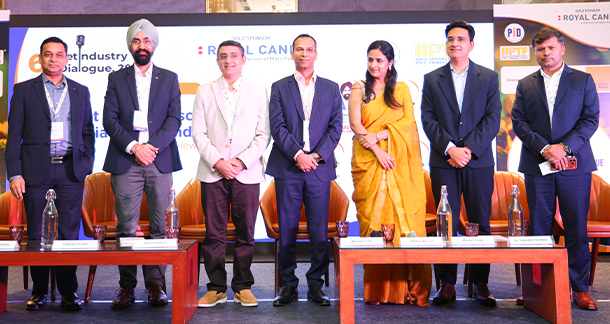
Key takeaways from the panel with Dr. Kunal Dev Sharma, Chief Veterinary Surgeon- MaxPetZ, Dr. Sathya Sooryan, Founder and Head of Nutrition of Treat Unusual Pet Hospital., Dr. Gautam Unny, Founder of Amrita Pet Clinic, Dr. Vinay Chhabra, Co-Founder of MyFurries, Moderator- Dr. Akanksha Diwakar, Head of Marketing, Allana Group
- India produces roughly 4,300 veterinary graduates a year, but a large share enter practice without hands-on clinical exposure, since university curricula remain focused on large/livestock animals rather than companion-animal specialization, a gap institutions are being urged to address in partnership with government.
- Beyond funding, the harder transition is building standard operating procedures, training pipelines, and institutional processes that don’t depend on any single doctor, a multi-year effort that includes running in-house residency and training programs to compensate for weak formal education infrastructure.
- An RTI filed with the Delhi government revealed no land parcels have been allocated specifically for veterinary clinics or hospitals, forcing most practices into spaces not designed for the purpose, a structural constraint on the sector’s growth.
- Clients arriving pre-informed from online research is increasingly viewed as a positive rather than a threat to professional authority, pet parents now ask about outcomes rather than simply requesting treatment, reflecting a more engaged, informed client base.
- While tele-consultation is broadly seen as essential for underserved tier-2/3 and remote regions, including successful outreach to Ladakh and the Nicobar Islands, some practitioners maintain that physical examination is irreplaceable for diagnosis, suggesting a hybrid model where remote specialists consult through a local vet or para vet.
- Rising legal awareness among pet parents is pushing veterinarians toward more diagnostic testing before treatment, shifting the old “health is wealth” mindset toward a more defensive “health versus wealth” posture driven by liability concerns.
- Pet parents increasingly pay for high-cost interventions (MRI, CT, surgery) once the value and necessity are clearly explained; new products like family-inclusive pet insurance (e.g., HDFC ERGO’s recently launched offering) signal a maturing market, even though under 1% of pets are currently insured.
• Despite rapid growth in food, apparel, and accessories, only one or two companies supply veterinary equipment across all of India, flagged as an overlooked, high-potential segment as thousands of new veterinarians enter private practice each year needing outfitted clinics
Pet Industry Investments: What VCs Are Actually Looking For
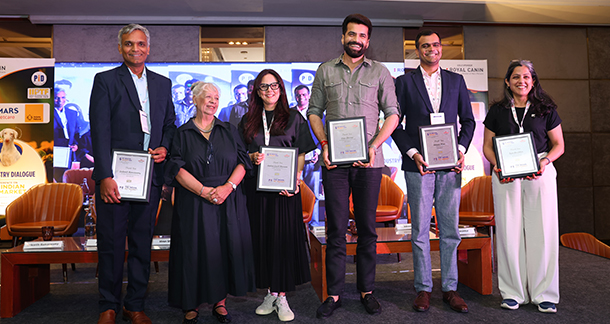
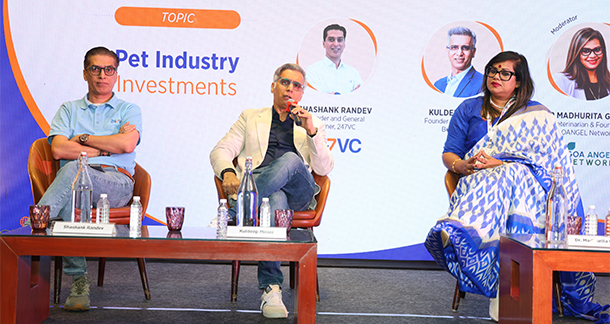
Key takeaways from Shashank Randev- Founder and General Partner at 247VC,Kuldeep Mirani, Founder and Group CEO of BeyondSeed, Moderator- Dr. Madhurita Gupta – Veterinarian & Founder, GOANGEL Network
- Beyond Seed looks to invest once a startup is generating a steady ₹20-25 lakh in monthly revenue with low cash burn, signaling the MVP stage is proven and the business model works, rather than backing pure concept-stage pitches.
- Rising single-child or child-free households seeking companionship, combined with pet ownership spreading from metros into tier-2/3/4 cities, are cited as the twin forces pulling significant capital into the sector over the past five years.
- One investor’s personal thesis: while pet food purchases tend to stay loyal to whatever is already working, it’s actually service providers, groomers, trainers, vets ,who influence a pet parent’s decisions most, since these professionals are trusted the way a paediatrician is trusted for a child who “can’t talk.”
- Food, pharma, and formulation-heavy pet products require specialist expertise on the team, similar to how a human-cosmetics or FMCG brand would need a formulation specialist — and investors say they actively evaluate for this when writing cheques
- Beyond Seed’s stated differentiation is pairing capital with a category-expert advisor for every check written, on the belief that “smart capital”, not just money, reduces a startup’s probability of failure and speeds up market entry.
• While traditional VC math chases power-law out sized returns (100x on a handful of winners), Beyond Seed explicitly targets a more measured 5x-in-5-years thesis across its portfolio, exiting mainly through follow-on funding rounds or acquisitions rather than IPOs.
• Investors flagged growing interest not just in mainstream categories but in adjacent opportunities, birds, exotic pets, deep-tech applications in pet care, and even stray-animal welfare infrastructure , as India’s “consuming class” (1.4 billion strong) increasingly extends humanization trends once reserved for people onto companion animals.
The Indian Cat Ecosystem: Breeds, Nutrition, Products & Market Trends
Key take aways:
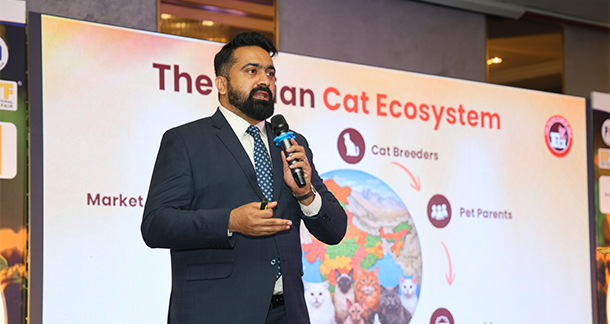
- The cat ecosystem consists of a few stakeholders the cat breeders, pet parents, nutrition, veterinary healthcare, pet products industry and marketing dynamics. The cat food market in India will double, but there is also a chance that the cat service industry will triple, right?
- FCI is also a registry where we register cats. We have provisions to register seven generations of the cat. We microchip every cat. Cat registrations are in upward trend.
- Cats are obligatory carnivore so home cooked food is not suitable in India we do not consume meat everyday.
- Some people feed milk to a stray cat in India but cat is lactose intolerant. They are, unknowingly, harm cats rather than supporting.
- A lot of new breeds of cats are being kept at homes. There are 15 visible breeds in our country right at the moment which is domestic, domestic shorthair. Long haired pedigreed cats are Persians, Maine Coons, being our favorite classic breeds.
- Persian cats are very calm, cozy cats, low on energy but beautiful, really gracious. They need quality proteins, Omega three omega six essential amino acids because they have long, long, long hair. They will pick the kibble from the back of the tongue. So they require a specific, shape of kibble, which is goes with their anatomical.
- Maine Coon, world’s biggest domesticated cat. They are hunting cats. Maine Coon comes from US State of America. They are huge cats. I have a boy which is 16, 16.5 Kg in weight. They require good amount of protein and fat and calcium phosphorus to make sure that calcium phosphate is balanced, to make sure that growth is optimum. When they break kibbles, it should it should sound like they are breaking the bones of the prey because it’s an actual hunting cat. These are the consideration pet food companies must keep in mind.
- Dry food versus wet food. Cats do not drink water. The doctor advises you to make cats drink more water. You need to make sure that the water content in your cat’s daily life is fulfilled by various means.
- Cat scratch posts and toy which keeps the cat active and enrich so they don’t have boredom.
- We are not even one fourth, one fifth of dogs in the country, but we have surpassed the overall dog food consumption in quick commerce and in E-Com we are head to head now. Sales of cat food growth. This is something which has been constant growth in our country.