
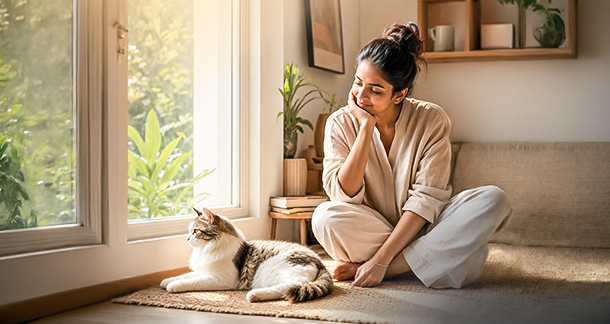
Modern pet parenting has evolved into something profound. Cats are no longer just animals who curl up on the couch , they are family. They have birthdays, Instagram accounts, and vet appointments booked months in advance. But here is the fascinating paradox of cat parenting: the more we love them, the harder it is to know when to step in and when to simply let them be.
Cats are fiercely independent. They do not fetch on command, they do not follow a jogging schedule, and they will absolutely judge you for trying to put them in a stroller. Yet beneath that graceful indifference lies a creature with very real physical needs, that shift dramatically depending on their age and life stage.
Here is what every devoted cat parent should know.
Why Physical Activity Matters,Even for a Cat Who “Does Nothing All Day”
Before diving into life stages, let us address the elephant (or rather, the very still cat) in the room. Cats sleep an average of 15 hours a day, with kittens and seniors stretching that to nearly 20. So when does exercise happen?
The answer: in short, intense bursts. Cats naturally distribute 30 to 60 brief activity episodes throughout the day, each lasting anywhere from 15 seconds to 2 minutes. This is not laziness , it is evolution. And understanding this rhythm is the first step to monitoring activity gently and without disruption.
Physical activity in cats supports healthy weight maintenance, strong joints, mental stimulation, and emotional wellbeing. Studies have also found that overweight cats have significantly lower voluntary physical activity, around 60% less than their lean counterparts ,creating a cycle that is much easier to prevent than reverse.
Activity by Life Stage: A Gentle Guide
Kittens (0–6 months): The Chaos Stage
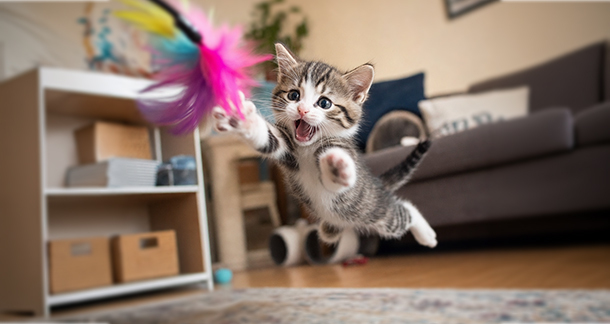
Kittens are essentially tiny tornadoes. They see your home as one enormous, thrilling activity centre. At this stage, play is not optional, it is how they develop motor skills, coordination, and social behaviour. Aim for several short play sessions daily using wand toys and items they can physically “catch.” Avoid laser pointers, which can create frustration since the cat can never complete the natural prey sequence of pouncing and catching.
Juniors (6 months – 2 years): Finding Their Rhythm
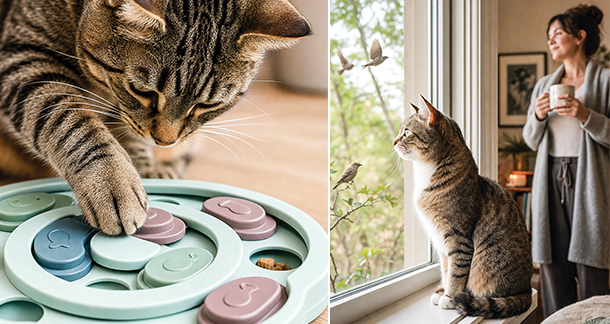
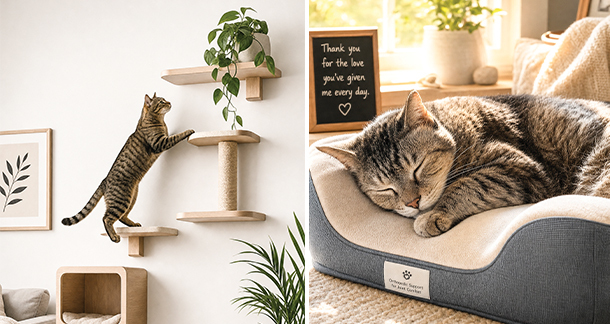
Young adult cats are still highly energetic but beginning to develop their personality and routines. Interactive toys, puzzle feeders, and hide-and-seek games are ideal. This is also a good stage to introduce vertical spaces, cat trees, wall shelves, and climbing structures, as cats love to survey their environment from height.
Prime Adults (3–6 years): Peak Health, Stable Energy
During the prime stage, cats are at their healthiest and most physically capable. Their personalities have settled, they maintain excellent muscle tone, and their energy levels are consistent. This is often the easiest period of cat ownership, but it is also when establishing good movement habits matters most. Two play sessions a day of around 10–15 minutes each are ideal, combined with enrichment tools like puzzle feeders to keep the mind sharp.
Mature Adults (7–10 years): The Subtle Slowdown
Here is where attentive cat parents need to pay closer attention. Mature cats begin slowing down gradually, metabolism shifts, activity levels quietly decrease, and early signs of arthritis can emerge. Watch for reduced jumping, stiffness after resting, or reluctance to use climbing structures they once loved. Gentler, shorter play sessions and orthopedic resting spots become more important at this stage.
Senior & Geriatric Cats (11+ years): Less Is Still Something
Senior cats may sleep even more and prefer quiet routines over stimulation. However, complete inactivity is not healthy either. Light daily movement, even a slow wander around the home, a few minutes with a gentle toy, or a window perch to watch birds, keeps joints mobile and minds engaged. Changes in sleep patterns can also be early signs of cognitive decline, making observation a quiet but important daily habit.
How to Monitor Activity Without Hovering
The good news for overprotective cat parents: monitoring does not mean micromanaging. Here are gentle, non-intrusive ways to stay informed.
Observe their baseline. Spend a few days simply noting when your cat is active, for how long, and what triggers movement, light through a window, feeding time, your own presence. This creates a personal movement signature unique to your cat, far more useful than any textbook average.
Track behavioural changes. Sudden drops in activity, excessive hiding, changes in vocalisation, or new aggression during what used to be cuddle time are all signs worth a vet conversation. A quiet cat going quieter, or a sociable cat withdrawing, are gentle red flags.
Use technology wisely. Activity trackers designed for cats, such as those that attach to collars, can monitor daily movement, track sleep quality, and alert you to sudden spikes or drops. These are particularly useful for outdoor cats or those prone to weight gain.
Watch the weight. A monthly at-home weigh-in (simply weigh yourself holding your cat, then subtract your own weight) can catch gradual changes early. Unexplained weight gain or loss often connects directly to changes in activity levels.
The Golden Rule: Follow Their Lead, Not Your Anxiety
The most important thing a cat parent can do is observe without imposing. Cats communicate their needs through behaviour, body language, and routine. When something shifts, even subtly, that is your cue to pay attention.
You do not need to force a 10-year-old cat to chase a feather wand for 20 minutes. But you do need to notice when the cat who once leapt onto the kitchen counter has quietly stopped trying.
Loving a cat well means learning to read the silences.
By Simran Sharma