
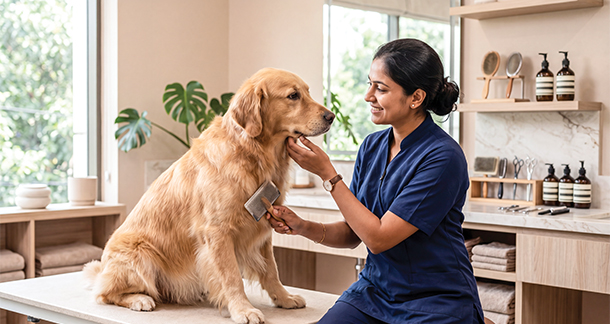
I didn’t set out to spend 18 years fighting for groomers to be taken seriously. I set out to groom dogs well. The fighting came later, once I understood what the job actually was and how little the industry around it understood that.
When I started, grooming in India was barely a profession. It was something you did on the side, something people assumed you fell into because you liked animals and didn’t have other options. Nobody talked about anatomy. Nobody talked about skin science or breed-specific coat structure or how to read a dog’s stress response before it became a bite. You watched someone, you practiced, and eventually you called yourself a groomer.
I went abroad to get certified because there was no other way. I competed internationally because I needed to know where I actually stood. What I found, every time I sat in a room with formally trained groomers from Australia, Europe, the US, was that they thought differently. Not just better technique, but a different relationship with what they were doing and why it mattered.
That gap has bothered me ever since. Still does.
The groomer sees everything
A dog visits the groomer every one to six weeks. A cat every six to twelve weeks. No other professional in the pet care ecosystem touches an animal that frequently, that thoroughly, or that consistently across its life.
In that time, a skilled groomer notices things. A lump that wasn’t there last month. A skin condition worsening despite the owner’s new shampoo. A coat texture change that points to something dietary. Weight fluctuation. Lethargy. Anxiety patterns. A groomer who knows what they’re looking for is, functionally, an early-warning system for a pet’s health and welfare.
I’ve had groomers in my network flag potential hypothyroidism, early-stage mange, lumps that turned out to be cancerous, and liver disease in dogs whose owners had no idea anything was wrong. They didn’t diagnose. They referred. And that referral changed the outcome.
This is not anecdotal. It’s a structural fact about how often groomers interact with pets and how those interactions involve.
From service provider to wellness observer
The industry still categorises grooming as a service, which is accurate in a business sense but misleading in every other sense. A groom is not just a bath and a haircut. It’s a full-body assessment. It’s a conversation about what the owner is feeding, what products they’re using at home, how the dog has been behaving. Groomers absorb this information constantly, whether or not anyone has formally asked them to.
The ones who are trained well use it. They cross-reference coat health with diet. They notice correlations between a switch in protein source and a flare in skin irritation. They’ve seen what a grain-heavy diet looks like on a Bichon’s skin versus what a high-fat raw diet does to a Schnauzer’s coat. This is accumulated, specific, breed-sensitive knowledge that most pet owners cannot get anywhere else and that takes years to build.
The relationship nobody is talking about
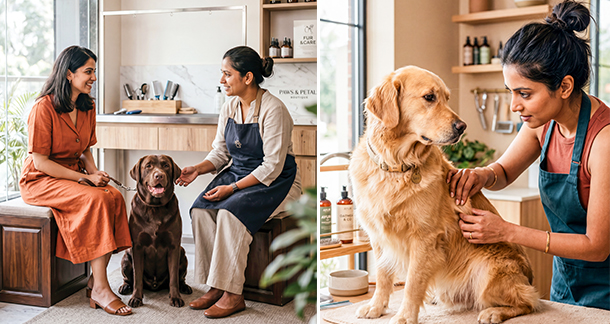
A groomer with a loyal clientele of two hundred dogs does not have two hundred customers. They have two hundred relationships.
They know the dog’s name, its quirks, which ear it hates having touched, what it was like as a puppy versus now at seven years old. They know the owner’s life sometimes better than the owner’s own friends do, because grooming appointments are exactly the kind of low-stakes, recurring, unhurried settings where people talk. Where they mention the divorce, the new baby, the move, the rescue they just brought home. A good groomer holds all of that, appointment after appointment, year after year.
That context changes everything about how a recommendation lands.
When I tell a client I’ve been using a particular conditioner for sensitive skin and I think it would help their dog, I’m not a stranger making a pitch. I’m the person who has been washing their dog since it was twelve weeks old. They don’t go home and Google it. They buy it. Because the recommendation comes with years of history behind it, and history is the one thing an advertisement cannot manufacture.
This is what brands fundamentally misunderstand when they think about working with groomers. They treat it as sampling. Leave a few bottles, get some feedback, maybe a social post. That is a transactional approach to a relational asset, and it captures almost none of the actual value.
On the subject of free grooming
I want to say something directly here because it comes up constantly and it needs to be said plainly.
Offering free grooming as a product promotion is one of the most damaging things a brand can do to this profession. And most brands don’t even realise they’re doing damage.
Here’s what it communicates, whether you intend it or not: that the groomer’s time, skill, and professional judgment are worth nothing on their own. That the grooming is a vehicle for shifting product, not a service with its own value. That a qualified person who has spent years learning animal behaviour, skin science, breed standards, and safe handling technique should be grateful for the exposure.
A dermatologist doesn’t offer free consultations so a skincare brand can hand out samples in the waiting room. A physiotherapist doesn’t discount their sessions so a supplement company can get access to their patients. But brands do this to groomers regularly and expect them to feel like partners in the process.
The groomer-client relationship carries weight precisely because it is built on trust. When a brand tries to leverage that relationship by treating the groomer as a free service prop, it erodes the very thing that made the relationship valuable in the first place. You don’t get the recommendation engine by undermining the recommender.
Why brands should take this seriously
When a groomer recommends a shampoo, pet owners listen. When a groomer says a food is doing something to a dog’s coat, the owner goes home and reads the label. When a groomer expresses concern, it carries weight because the groomer is the person who has spent years watching that specific pet.
That is not influencer reach. That is trusted advisor status. A different kind of authority entirely, and it converts differently.
Compare this to what most pet brands spend on social media partnerships. A pet influencer with 300,000 followers posts a reel, engagement is decent, conversion is nearly impossible to trace. The groomer with 200 loyal clients recommends the same product across every appointment for three months. Conversion is immediate. The groomer who works with a premium brand isn’t just a user of that product. They’re a living endorsement inside a relationship the brand could never build on its own.
And here’s the part that gets overlooked. It doesn’t matter whether that groomer works independently out of a small salon or services the most well-heeled clientele in the city. The dynamic is the same. The pet owner trusts the person standing in front of their pet, not the label on the bottle. The groomer is the last mile. The most important mile.
The brands investing in groomers, not just sending them samples but genuinely showing up for the profession, are the ones building something real. A groomer who understands the science behind a product can explain it in a way that sticks. A groomer who only received a freebie can only offer an opinion. One becomes a repeat recommendation engine. The other is a one-time mention.
The question worth asking is not whether groomers have influence. Eighteen years in this industry have shown me they do, consistently, quietly, and in rooms no sponsored post will ever reach. The question is whether brands are willing to show up for that relationship the way groomers have always shown up for theirs.
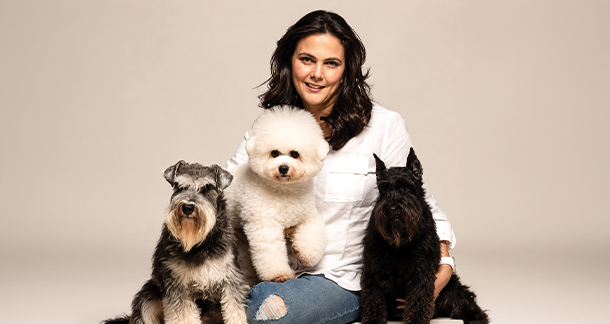
Andrea Cyrill Khurana – Founder of Petsburgh International Grooming Academy, Founder-President of the Professional Pet Groomers Association of India(PPGAI), International Certified Master groomer, International speaker and advocate for the recognition of professional pet services.