

By R. Selvakkumar A.Clement Ebenezer Henry & N. Balmurugan
Alopecia or hair loss is a very common condition in dogs. In affected dogs, part or complete lack of hairs is noticed in areas where they are normally present. Alopecia is different from shedding of hair, which is a normal part of the hair growth cycle and varies with the dog’s breed.
Causes of Alopecia in Dogs
Though there are several causes of alopecia in dogs, below are some of the most common ones:
- Parasitic origin
- Infections origin (bacterial, fungal)
- Allergies
- Autoimmune disorders
- Endocrine diseases
- Genetic causes
- Nutritional causes
- Vaccine site alopecia
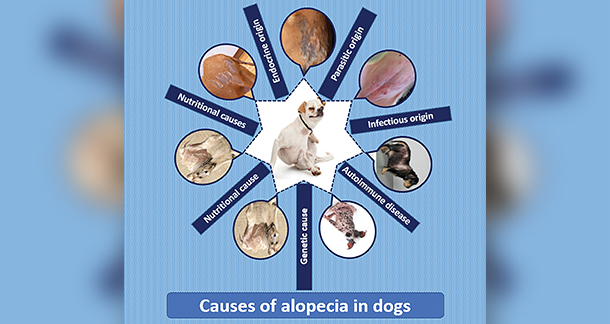
Parasitic origin
Blood sucking parasites like fleas bite the dog for blood and the flea bite allergy is the most common allergen in dogs and make the animal scratch its body over rough surface and lead to hair loss.
Ticks are also a blood sucking parasite and tick infestation leads to many health issues including tick fever. Further their bite will make the animal feel itchy.
Canine Scabies, Ear Mites infection, Walking Dandruff (Cheyletiellosis) and Canine Demodicosis in dogs are caused by Mites which live in skin and hair follicles and all these problems will result in skin and coat problems including hair loss. Hair loss, itching, scratching, skin lesions, foul odor and dull coat are some of the symptoms of external parasitic infestation. All these external parasitic problems can be easily overcome by timely interventions by the veterinarian.
Internal parasites like Giardia, Hookworms and Tapeworms have their habitat in the digestive tract of the animals and compete with the hosts for nutrition. This will lead to nutritional deficiency in dogs and leads to dullness of skin and coat to loss of hair in dogs
Infectious causes
Infection caused by bacteria and fungus also produce skin and coat problems including hair loss.
Pyoderma (Pus in the skin) is primarily due to a bacterial skin infection. Skin aberrations act as an entry point for bacteria into the host to cause pyoderma. Clinical signs include circular crusts, dry or flaky patches of skin, hair loss, and itching.
The Fungus Candida forms part of the normal flora in an animal’s mouth, nose, ears, and gastrointestinal and genital tracts. Stress caused by prolonged medication and immune suppuration make the animal more prone to this infection.
Ringworm is an infection of skin, hair, or claws caused mainly by Microsporum canis. Bald, scaly patches with broken hairs are characteristic symptoms. Acne-like bumps on the skin are also noticed in affected dogs.
About the Authors:
Department of Livestock Production Management
Veterinary College and Research Institute, Tirunelveli- 627 358, Tamil Nadu
(Tamil Nadu Veterinary and Animal Sciences University)
Allergy
Food allergy, environmental allergy (Pollen), drug allergies, parasite allergy (Flea bite allergy) are also sometimes causes hair loss in dogs. The severity of this allergy may vary with rearing environment, feeding practices and breed. Treatment is effective only if we trace out and remove the root cause.
Autoimmune disease
Autoimmune disease is a condition in which the immune system attacks its cells. When the body is unable to differentiate between good and bad cells, autoantibodies attack all cells.
Discoid (Cutaneous) Lupus Erythematosus (SLE):
Discoid lupus erythematosus (DLE), (Cutaneous lupus erythematosus) is an autoimmune disease that affects the skin. Affected Dogs with DLE develop crusting and scabbing of the skin, most commonly starting around the nostrils, as well as a loss of skin pigmentation in the affected area.
Pemphigus foliaceous:
Pemphigus Foliaceus is an autoimmune skin disease in dogs characterized by acantholysis or loss of adhesion between keratinocytes within the epidermis and hair follicles. About one-third of autoimmune disorders of canine are pemphigus, making it the most common dermatological autoimmune disease. Clinical lesions include ulcers, pustules, erosions, crusts and alopecia.
Endocrine origin
If the hair loss is due to the disturbance or malfunction of hormones in the endocrine system, it is classified as an endocrine alopecia. Hair loss due to hormonal origin can range from a small patch to a large body area. An endocrine alopecia is often symmetrical on both sides of the body, usually on the lower back or belly, and is not itchy or uncomfortable for dogs. Some endocrine disorders that may cause hair loss are:
Cushing’s disease:
Cushing disease is hyperadrenocorticism caused by an ACTH-secreting tumor of the pituitary gland. Clinical signs include polyuria, polydipsia, alopecia, and muscle weakness. Above condition is mainly due to Pituitary gland tumor (80-90 % cases) and also by Adrenal gland tumor and Excessive cortisol from prolonged use of steroids.
Hypothyroidism:
Hypothyroidism is one of the most common hormonal (endocrine) diseases in dogs. In dogs, hypothyroidism is usually caused by one of two diseases: lymphocytic thyroiditis or idiopathic thyroid gland atrophy.
Apart from the primary clinical symptoms (Weight gain and lethargy) the symptoms listed below are also noticed in the dogs affected by hypothyroidism
- Very thin to nearly bald hair coat
- Increased dark pigmentation in the skin
- Increased susceptibility and occurrence of skin and ear infections
- Failure to re-grow hair after clipping or shaving
Genetic cause
In congenital hypotrichosis, a dog will lose his hair either at birth or at a few months of age, congenital hypotrichosis is the result of missing hair follicles or follicles having not developed correctly.
Nutritional cause
A ration with balanced nutrients is must for the overall health status of the dogs. Protein and energy are needed for skin and hair coat development. If food does not have adequate protein or fat, the dog may develop areas of hair loss or the hair may lose color, dull hair coat or high brittleness of the hair.
Further, essential fatty acids (EFAs) are the critical group of nutrients for good canine skin and hair coat quality. EFAs must be provided in the regular diet because the body cannot manufacture them. EFA deficiency causes the skin to become scaly and dry, matted hair and the skin loses its elasticity. Excessive shedding as well as thin, brittle and patchy hair is often a visible indication of nutritional deficiencies. Dietary copper, Zinc, vitamin D and Vitamin A are essential for healthy skin and coat
Biotin, Folate and Vitamin C are also essential for healthy skin and coat. Hair loss can also seen in Iodine deficiency as it’s a mineral that aids thyroid function
Post-injection alopecia/ Vaccine reaction alopecia
Some dogs get a local reaction from the vaccine that causes hair loss. Some dogs can develop alopecia at the injection site due to skin inflammation.
The treatment for alopecia in dogs will depend on the underlying reason for the hair loss. In alopecia of infective and parasitic origin can be treated by topical or oral forms of anti-parasitic, antibiotics, antifungals, or anti-inflammatory medications. If the alopecia is due to hormonal disorders, treatment to relieve or reverse the hormonal imbalance will be helpful in renewed hair growth. In allergies, removing the trigger and symptomatic treatment will improve the condition. Many forms of congenital alopecia do not have effective treatments, other than keeping the dog’s skin moisturized to help avoid dryness or flakiness. Maintaining the dog in a hygienic environment with a well-balanced nutritional regime will definitely be helpful for healthy skin and lustrous coat.